

If you are sourcing umbrellas for a restaurant patio, hotel poolside, resort, café or outdoor event, you are buying equipment that must fit a specific site—not simply a larger version of a household umbrella.
The canopy, frame, opening system, base and installation method work as one system. A strong-looking frame can still become unstable if the base is undersized, the umbrella is installed incorrectly or staff leave it open in unsuitable weather. This guide explains the points a commercial buyer should confirm before ordering custom large-format umbrellas.
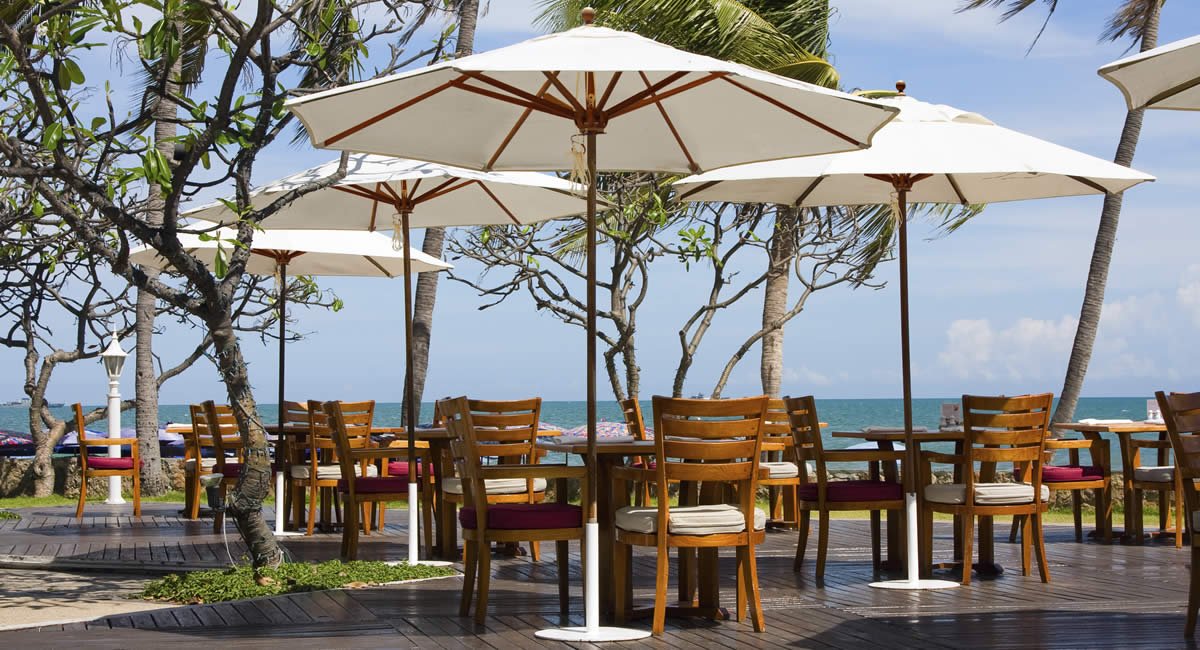
Table of Contents
1. Start With the Site, Not the Umbrella
Before choosing a model, record where and how the umbrella will be used. These details determine the appropriate size, structure and fixing method.
- Application: dining tables, pool loungers, entrance areas, promotional events or beach service.
- Available footprint: include tables, chairs, walkways, doors and emergency access.
- Surface: concrete, timber decking, sand, grass or another finished floor.
- Exposure: sheltered courtyard, open rooftop, coastal area or seasonal event site.
- Operation: who opens, closes, stores and inspects the umbrellas each day.
Safety note: No outdoor umbrella should be described as universally “windproof.” Wind performance depends on the complete product, base or anchoring system, installation, site exposure and operating procedure. Commercial umbrellas should be closed in severe weather and whenever the site’s safe operating conditions are exceeded.
2. Centre-Pole or Cantilever Umbrella?
Centre-pole umbrellas
A centre pole passes through a table or stands in a separate base. This format is space-efficient and commonly used for cafés, restaurants, event areas and branded promotions.
- Advantages: simpler load path, familiar operation and efficient use around dining tables.
- Check: pole diameter and wall thickness, rib construction, connector design, opening mechanism and compatibility with the selected table and base.
- Best fit: commercial dining, market-style installations and areas where the central pole does not obstruct the intended use.
Cantilever umbrellas
A cantilever or offset umbrella supports the canopy from the side, leaving the shaded area more open. It is useful over lounge seating and poolside spaces, but the offset load normally requires a larger frame and a heavier or permanently fixed base.
- Advantages: unobstructed space beneath the canopy and a premium architectural appearance.
- Check: arm and hub construction, rotation and tilt controls, base specification, clearance and safe closing procedure.
- Best fit: resort lounges, pool decks and seating layouts where a centre pole would interfere with guests or furniture.
Do not select a pole diameter from one universal rule. A suitable specification depends on canopy width, shape, frame geometry, material, wall thickness and installation conditions.
3. Frame Materials and Opening Systems
| Material | Typical advantages | Points to confirm | Common use |
|---|---|---|---|
| Powder-coated aluminium | Relatively light, corrosion-resistant and available in different finishes. | Alloy, section size, wall thickness, coating preparation, fasteners and exposure to salt or chemicals. | Restaurants, hotels, poolside areas and event programs. |
| Fibreglass components | Can flex under load and resist corrosion. | Section size, connection design, UV exposure, overall frame weight and replacement availability. | Selected ribs or frames where flexibility and corrosion resistance are useful. |
| Hardwood | Warm, traditional appearance suited to premium hospitality settings. | Wood species, finish, moisture exposure, maintenance schedule, hardware and storage. | Resorts, restaurants and projects requiring a natural appearance. |
Opening systems
- Pin and pulley: mechanically simple and serviceable, but staff must be trained to secure it correctly.
- Crank system: convenient for frequent opening and closing; inspect the gearbox, cable, handle and replacement-part availability.
- Push-up or manual systems: suitable for some smaller commercial styles where simplicity and quick setup are priorities.
The complete sample should be operated several times by the people who will actually use it. A mechanism that feels easy in a showroom may be awkward beside tables, walls or pool furniture.
4. The Base and Installation Are Part of the Product
Buyers often spend time comparing canopy fabric and frame material, then treat the base as an accessory. That is a mistake. The base, mounting hardware and site surface are fundamental to stability.
Information needed before specifying the base
- Umbrella model, canopy dimensions and total weight.
- Centre-pole or cantilever construction.
- Freestanding, table-supported, bolted or in-ground installation.
- Surface type and whether drilling or permanent anchors are permitted.
- Local wind conditions and site exposure.
- Whether the unit must be moved or stored regularly.
Freestanding bases may use steel plates, concrete, granite, water or sand-filled components, depending on the design. The required weight cannot be determined from canopy diameter alone. For permanent commercial installations, the property owner or contractor should confirm anchoring and local safety requirements.
5. Canopy Fabric, Water Performance and Colour
Commercial canopy fabric must be selected around the expected exposure, desired service life, printing method and budget.
- Polyester: widely used for branded projects and available in many weights and finishes.
- Solution-dyed or higher-performance outdoor fabrics: may provide better colour performance for long-term exposure, depending on the material and test specification.
- Water performance: define whether the requirement is water repellency or a tested level of waterproof performance. Seams and ventilation openings also affect leakage.
- UV and colourfastness: request the test method and required grade when a project has a formal performance requirement.
- Replaceable canopy: useful for long-term commercial programs because the fabric can be replaced without discarding the complete frame.
For a more detailed explanation, read our guide to waterproof and water-repellent umbrella fabrics.
6. Branding: Main Panels, Valances and Colour Matching
A commercial umbrella is both functional shade and a visible brand asset. Branding should be planned around normal viewing angles rather than filling every printable area.
- Valance printing: places a logo, venue name or short message near eye level.
- Main-panel printing: offers larger artwork and better visibility from upper floors or a distance.
- Alternating panels: can balance brand colour and reduce visual clutter.
- Inside printing: may be useful for guest-facing artwork, although it can require a different canopy construction.
- Pantone matching: approve a printed sample or colour swatch because fabric, coating and printing method influence the final result.
Digital printing is suitable for detailed or multi-colour graphics. Silk-screen printing is often more economical for simple logos and solid colours. The best option depends on artwork, canopy material, print area and order quantity.
7. Maintenance, Spare Parts and Operating Rules
Commercial buyers should plan for the full operating life of the product, not only the initial delivery.
- Close umbrellas when unattended or when weather conditions become unsuitable.
- Do not allow water to collect on a closed or incorrectly angled canopy.
- Inspect ribs, hubs, fasteners, crank cables and base connections regularly.
- Clean and dry the canopy before long-term storage.
- Ask whether replacement canopies, ribs, cranks or fittings can be supplied.
- Keep written opening, closing and wind-safety instructions for staff.
8. MOQ, Sampling and Production Time
For selected commercial umbrella styles, the minimum order can start from 25 pieces per design. Exact MOQ depends on canopy size, frame, base, fabric, printing method and the number of designs.
- Sample time: normally 3–5 days after specifications and artwork are confirmed.
- Bulk production: normally 15–20 days after sample approval and deposit.
- Additional time: custom frames, special bases, performance testing or complex printing may extend the schedule.
Compare our custom patio umbrellas and custom beach umbrellas. You can also review the custom design and manufacturing process and our umbrella case studies.
Commercial Umbrella RFQ Checklist
Include the following information when requesting a quotation:
- Application and destination market.
- Required canopy size, shape and quantity.
- Centre-pole or cantilever preference.
- Site surface and preferred base or anchoring method.
- Fabric, colour, water and UV requirements.
- Logo artwork and desired print locations.
- Required delivery date and destination.
Planning a Commercial Outdoor Umbrella Project?
Send us your site information, required size, quantity and logo. We will help you compare suitable frame, canopy, base and printing options before sampling.