A practical guide to controlling color differences between artwork, fabric samples and bulk umbrella production.
Table of Contents
How to reduce color surprises
- Use RGB and CMYK as artwork references. They do not predict exactly how ink will appear on umbrella fabric.
- Provide a Pantone reference when brand color matters. The factory can then evaluate the closest practical result for the selected material and printing method.
- Approve a physical sample or printed fabric swatch. Agree on an acceptable visual tolerance before bulk production.
- Check the sample under suitable lighting. Daylight and controlled light sources may show the same color differently.
Contents
1. Why RGB, CMYK and Pantone are different 2. How umbrella fabric changes color 3. Printing methods and color control 4. A practical sample approval process 5. Fluorescent colors, blues and other difficult shades 6. Lighting and acceptable color tolerance 7. Buyer checklist before bulk production FAQ
1. Why RGB, CMYK and Pantone are different
Buyers often ask why a printed umbrella does not look exactly like the artwork on a monitor. The short answer is that a screen, a paper proof and a fabric canopy create color in different ways.
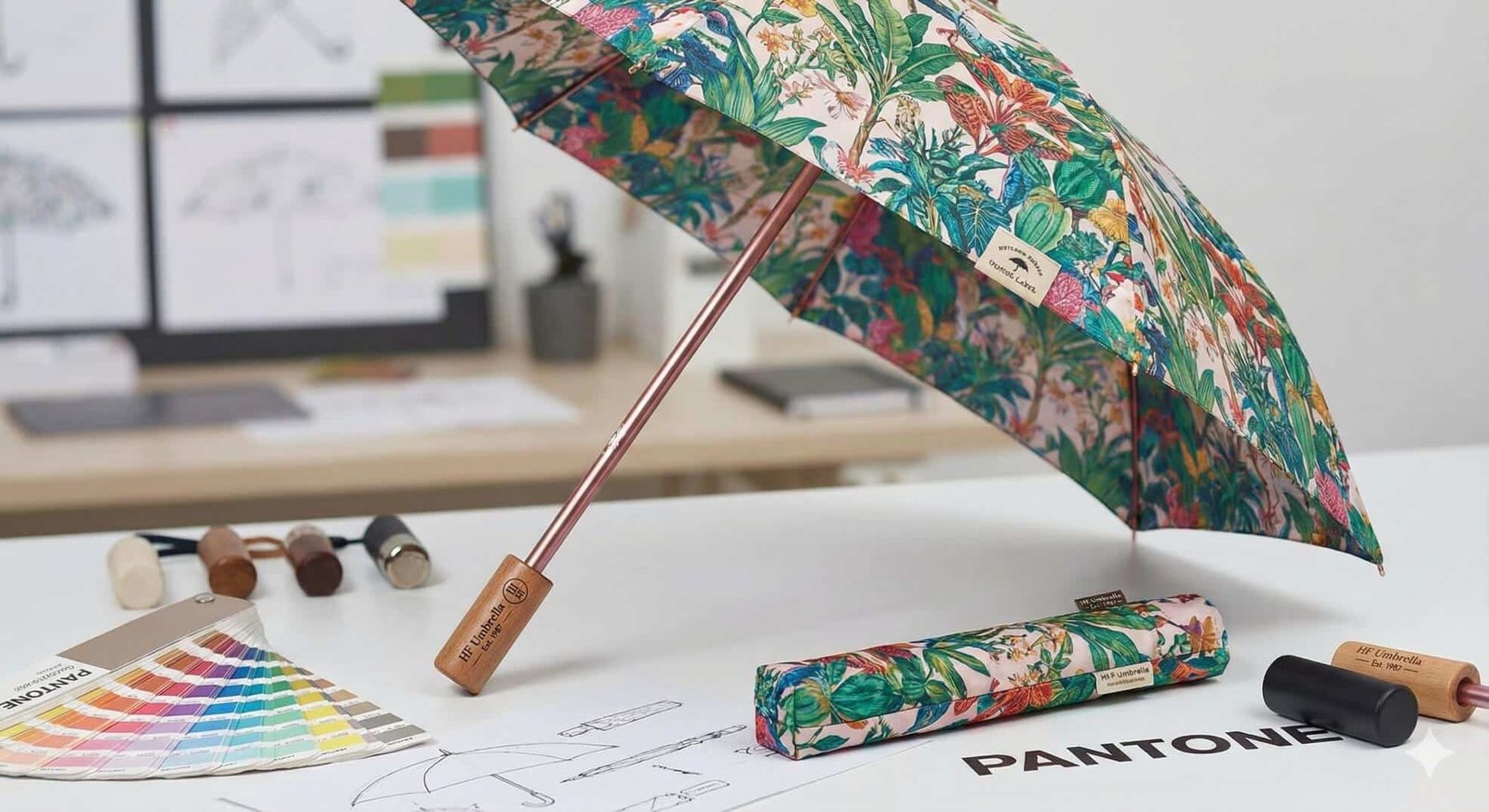
RGB describes colors produced by light on a screen. CMYK describes combinations of process inks commonly used for printed artwork. A Pantone reference provides a physical color target, but it still does not guarantee an identical result on every fabric and with every printing process.
For umbrella production, RGB or CMYK values are useful starting references. When a corporate color is important, a Pantone Solid Coated code and a physical reference sample give the production team a clearer target.
2. How umbrella fabric changes color
Umbrella canopies are usually made from polyester, pongee or coated fabrics. Their weave, surface texture, base color and coating affect how ink is absorbed or reflected.
- White and colored base fabrics produce different results.
- Matte, shiny, black-coated and silver-coated fabrics reflect light differently.
- Ink penetration and heat treatment can change saturation and sharpness.
- Water-repellent or UV coatings may influence the visible finish.
This is why a CMYK formula that looks correct on coated paper may appear lighter, darker or slightly warmer on umbrella fabric. The expected tolerance should be discussed before sampling, especially for brand colors.
3. Printing methods and color control
The most suitable color-control method depends on the artwork, order quantity and canopy material.
Digital printing
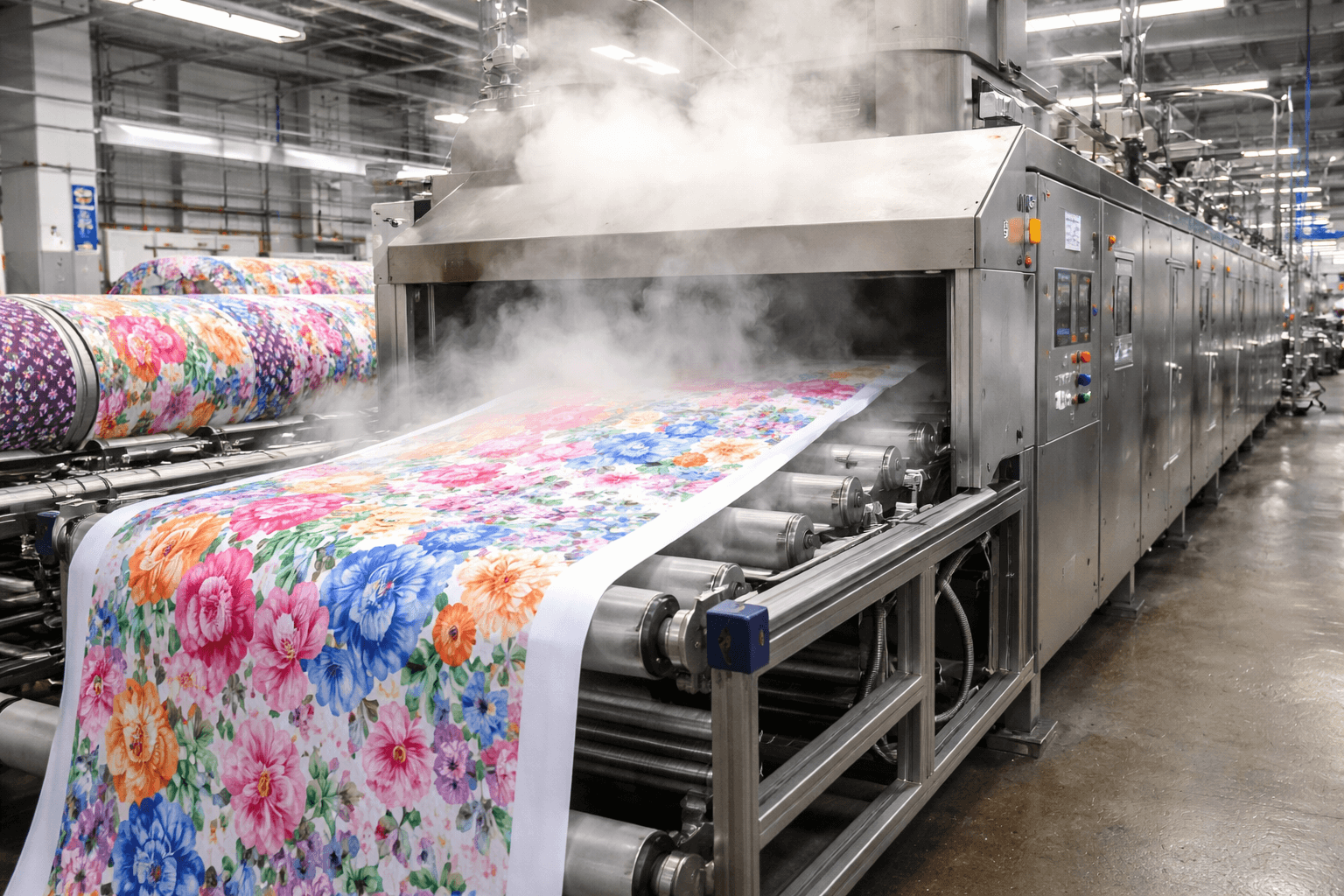
Digital printing works well for photographs, gradients and full-canopy artwork. It offers design flexibility and is suitable for many small-quantity projects. However, the output depends on the printer profile, fabric and ink system, so a Pantone reference can only be matched as closely as the process allows.
Heat-transfer or sublimation printing
Sublimation is commonly used on suitable polyester fabrics. It can produce strong colors and detailed artwork, but heat, fabric construction and the source file all influence the final appearance.
Silk-screen printing
Silk-screen printing is often practical for solid logos and selected spot colors. Special inks may be available for certain fluorescent or high-visibility effects, subject to the fabric, artwork, quantity and supplier capability.
See our custom umbrella artwork guide for file preparation and print-area advice, or review the complete custom umbrella design and manufacturing process.
4. A practical sample approval process
When color accuracy affects brand presentation, physical approval reduces risk. A typical process is:
- Confirm the artwork file, Pantone reference, fabric and printing method.
- Produce a printed fabric swatch or complete umbrella sample, depending on the project.
- Compare the sample with the agreed reference under suitable lighting.
- Record comments clearly and adjust the artwork or print settings if necessary.
- Approve the final sample and keep it as the production reference.
For many standard projects, umbrella samples take approximately 3–5 days. Complex structures, multiple revisions or special inks may require additional time.
5. Fluorescent colors, blues and other difficult shades
Standard CMYK digital or sublimation processes may simulate a bright neon shade, but they may not reproduce the same fluorescent effect seen on a backlit screen. If fluorescence is essential, confirm whether a suitable special ink and printing process are available before quotation and sampling.
Some blues, greys, reds and neutral brand colors can also show noticeable shifts when the fabric, ink density or lighting changes. Blue is not automatically the most difficult color on every job, but corporate navy and royal blue often deserve extra attention because small shifts toward purple or green are easy to notice.
Metallic, fluorescent and very dark colors should be identified as critical colors at the artwork stage—not after the bulk fabric has been printed.
6. Lighting and acceptable color tolerance
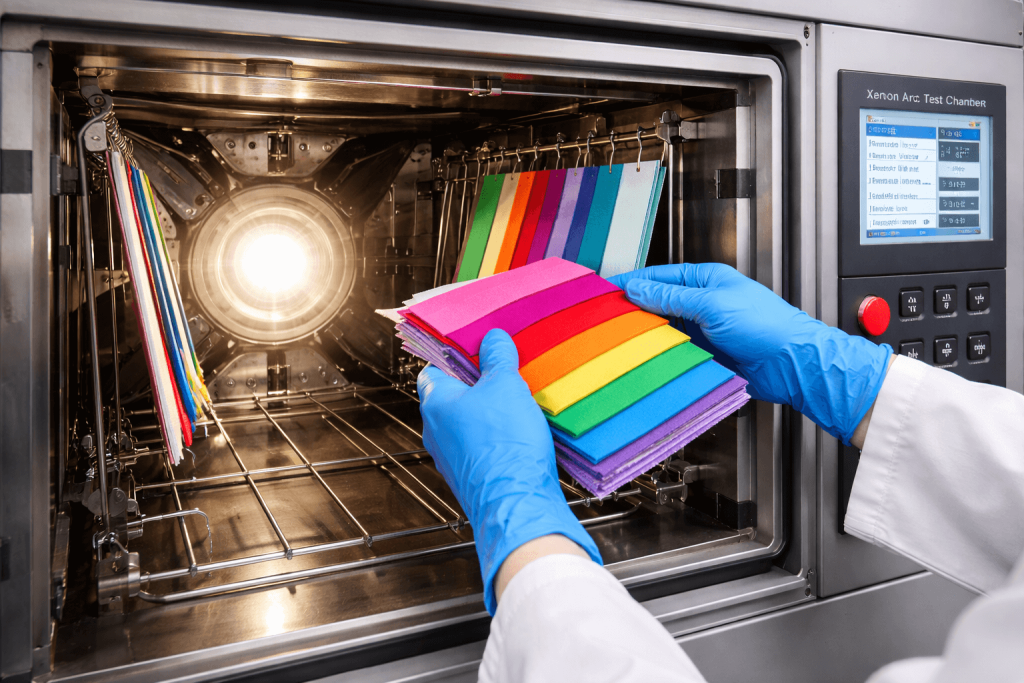
A sample can appear different under daylight, fluorescent factory lighting and warm indoor LEDs. This effect is known as metamerism. Because most umbrellas are used outdoors, daylight is a useful practical reference, but the correct viewing condition should reflect the product’s intended use.
Instead of promising a perfect match under every light source, buyer and supplier should agree on:
- the physical or Pantone reference;
- the approved fabric and printing method;
- the primary viewing light;
- the acceptable visual or measured tolerance, where required.
For projects that require formal instrumental color measurement, confirm the target standard, equipment and tolerance before ordering. These requirements are assessed case by case.
7. Buyer checklist before bulk production
- Supply editable artwork and identify critical colors.
- Use Pantone references where practical; do not rely only on a monitor.
- Confirm the exact fabric, coating and printing method.
- Approve a physical sample or swatch when color is commercially important.
- Record the approved version and revision number.
- Confirm whether a reasonable production tolerance is acceptable.
- Ask for production and quality-control records when the project requires them.
Poor color control can lead to rework, delays and inconsistent branding. A clear approval process is usually less expensive than correcting a bulk-production problem.
You can also review our custom umbrella case studies to see how artwork and products are developed for real projects.
Need help matching a brand color on umbrella fabric?
Send your editable artwork, Pantone reference if available, required quantity and preferred umbrella style. We will recommend a suitable fabric, printing method and sampling plan.
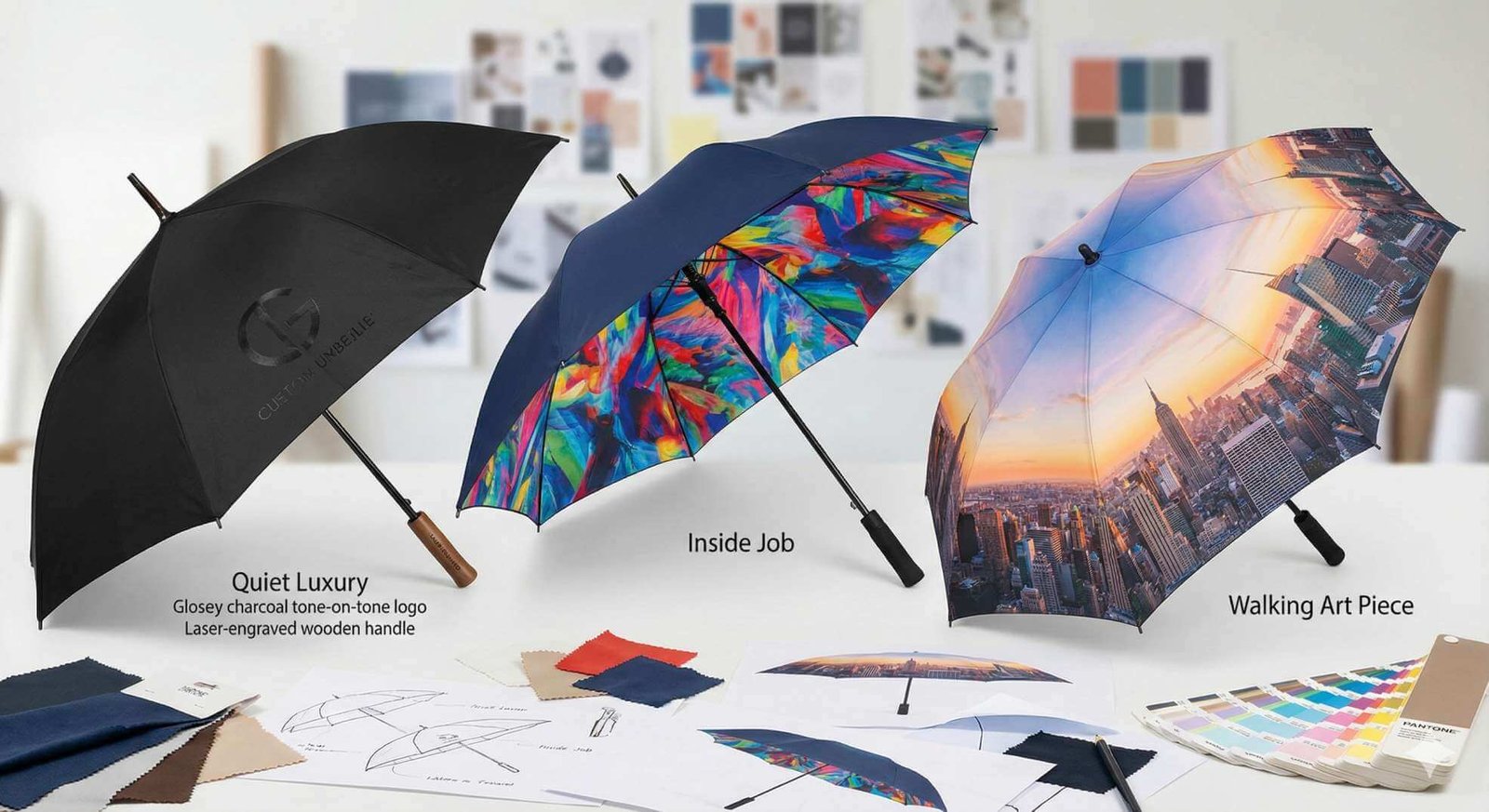
Frequently Asked Questions
Why does an umbrella color differ from the artwork on my screen?
Screens use RGB light, while umbrella printing uses ink on fabric. Monitor calibration, fabric weave, coatings, ink and lighting can all change the result.
Should I provide CMYK values or a Pantone code?
Provide the editable artwork and CMYK values, plus a Pantone reference when a brand color is important. The Pantone code gives the factory a clearer physical target, although the selected process may still have a practical tolerance.
Can digital printing reproduce fluorescent colors?
Standard process inks can create bright-looking colors but may not produce a true fluorescent effect. Special inks or screen printing may be required, subject to the material and project.
Do all orders require a printed sample?
Not always. The decision depends on the design, quantity, color sensitivity, budget and schedule. For color-critical orders, physical sample approval is strongly recommended.
How long does an umbrella sample take?
Many standard samples take about 3–5 days after artwork and specifications are confirmed. Complex construction, special inks or revisions may extend the schedule.
Can you guarantee an exact Pantone match?
We use the agreed Pantone or physical reference as the target, but fabric and printing processes can create variation. We confirm the closest practical result through sampling and agree on acceptance before bulk production.