
Table of Contents
What we have learned about cork canopies, handles and real-world production
At HF Umbrella, we were among the early custom umbrella manufacturers to experiment with cork for handles, top caps and complete umbrella canopies.
Over the years, brands and product designers have regularly asked us the same question:
“Can you really make an umbrella canopy from cork?”
The short answer is yes.
However, manufacturers cannot treat cork like ordinary polyester umbrella fabric. The cork layer, backing material, panel cutting, stitching and canopy tension must all work together.
A finished cork umbrella may look beautifully simple. In reality, producing one takes careful material selection, sampling and adjustment.
Cork Comes from Bark, Not the Trunk
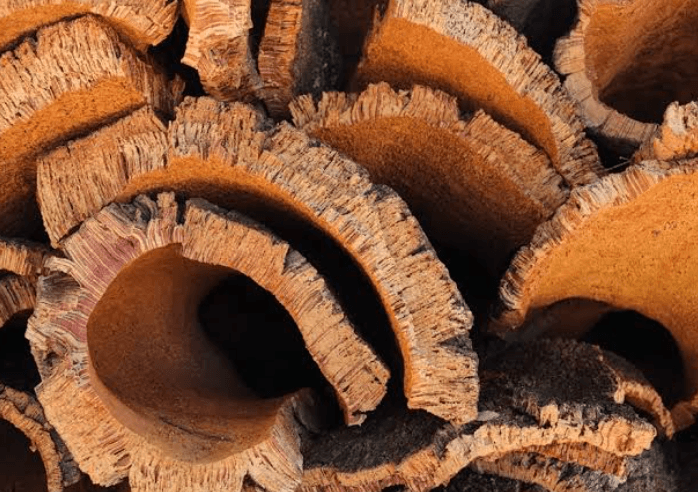
One of the most interesting things about cork is where it comes from.
Workers harvest cork from the outer bark of the cork oak tree rather than cutting into its trunk. When trained workers harvest the bark correctly, the tree remains alive and gradually grows a new outer layer.
Therefore, cork offers an unusual renewable cycle: people can collect the material without cutting down the tree.
According to the Portuguese Cork Association, cork’s cellular structure makes it extremely lightweight and naturally resistant to moisture.
HF Umbrella uses imported cork materials made from cork bark, not wood from the trunk. We select different grades and constructions according to the intended application. For example, a handle requires a different cork structure from a flexible canopy.
This distinction matters because manufacturers cannot process every type of cork in the same way.
The Material Reality: A Cork Canopy Does Not Use Solid Cork
A practical cork umbrella canopy does not use a thick sheet of solid cork.
If we stretched thick cork over an umbrella frame, the material could crack when the ribs opened. Instead, we use cork textile, which combines a very thin cork surface with a flexible fabric backing.
The cork creates the natural appearance and texture. Meanwhile, the backing provides the flexibility and strength required for cutting, stitching and repeated opening.
However, not every cork textile works well on an umbrella. A material may perform perfectly on a handbag, notebook cover or piece of furniture but fail when we stretch it over umbrella ribs.
Therefore, before we make a sample, we check:
- Surface flexibility
- Backing strength
- Finished material weight
- Natural grain and colour
- Suitability for cutting and sewing
- Performance during opening and closing
For this reason, we cannot recommend a cork construction based only on a product photograph. First, we need to understand the umbrella structure and where the buyer wants to use the cork.
What Makes Cork Different in the Workshop?
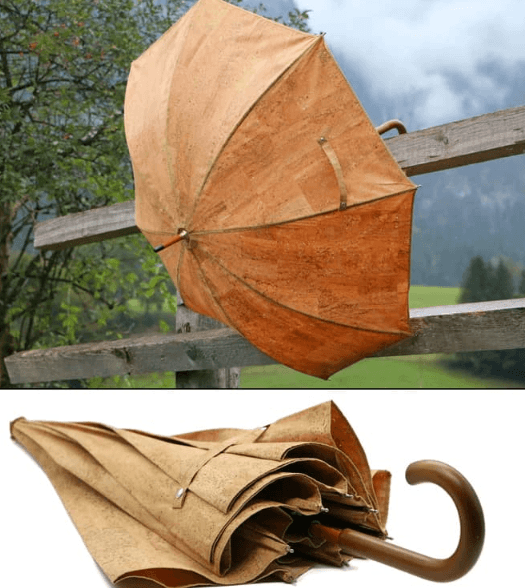
Standard pongee fabric is thin, consistent and relatively forgiving. In contrast, cork textile has a natural grain and varies from one section to another.
These differences give cork its character. However, they also create several practical production challenges.
Grain and colour variation
No two pieces of natural cork look exactly the same.
If workers assemble the panels without checking them first, one side of the canopy may appear much darker or more heavily textured than the other.
Therefore, our production team checks and sorts the cut panels before sewing. They arrange the grain and colour so that the completed canopy looks balanced.
We do not try to remove every natural difference. After all, those differences make cork attractive. Instead, we make them look intentional rather than random.
Canopy tension
Cork textile does not stretch like conventional umbrella fabric.
If we make the canopy too tight, opening the frame may place excessive stress on the cork surface. On the other hand, a loose canopy may sag and lose its shape.
As a result, we adjust the panel dimensions and seam allowances during sampling. We also open and close the prototype repeatedly to check the tension before production.
Needle holes and seams
Cork retains visible needle holes more readily than many conventional fabrics. Therefore, our workers must control the needle size, stitch length and thread tension carefully.
We pay particular attention to:
- Panel seams
- The centre of the canopy
- Rib attachment points
- Panel tips
- Areas that bend repeatedly
In addition, we assess water performance on the complete canopy. We do not rely only on cork’s natural resistance to moisture because water may still enter through seams, needle holes or the centre cap.
Opening and folding
Straight umbrellas usually work better with full cork canopies because the material does not need to fold into a very small package.
Compact folding umbrellas create more pressure along the same fold lines. Consequently, a full cork canopy may not suit every folding frame.
In such cases, we may recommend:
- A thinner and more flexible cork composite
- Cork on selected canopy panels
- A cork handle and top cap instead of a cork canopy
- A straight umbrella rather than a compact model
Sometimes a small structural change can make the final product much more reliable. Therefore, we prefer to review feasibility before the customer finalises the design.
How We Make a Custom Cork Canopy
The exact process depends on the design. Nevertheless, most custom cork canopy projects follow six main stages.
1. We review the concept
First, we review the buyer’s preferred umbrella style, size, quantity, artwork and intended use.
A luxury retail umbrella, an automotive gift and a promotional product may require different cork materials, frames and branding methods.
At this stage, we also check whether the original design will work as a practical umbrella.
2. We match the cork material to the frame
Next, we choose a cork textile with the appropriate flexibility, backing strength and weight.
At the same time, we select a frame that can support the canopy without making the umbrella too heavy or unbalanced.
We do not use one standard cork material for every project. Instead, we match the material to the umbrella’s size and structure.
3. We cut and arrange the canopy panels
Our cutting team uses the umbrella template to cut the cork textile into curved triangular panels.
After cutting, the team checks each panel’s grain, colour and surface. Then, they arrange the panels before sewing so that the finished canopy has a balanced appearance.
This manual step matters because cork is a natural material and its appearance varies across every sheet.
4. We test the branding method
Cork has a textured surface, so a logo may not reproduce as sharply as it would on smooth polyester fabric.
Depending on the design, we may recommend:
- Printing on the cork canopy
- Laser engraving on the cork handle
- Adding a custom metal badge
- Printing the logo on the strap or sleeve
- Combining several subtle branding details
For example, a large simple logo may print well on the canopy. In contrast, a small logo with fine text may look better on a metal badge or engraved handle.
Therefore, we test the artwork on the selected material before bulk production.
5. We sew and assemble the canopy
Our sewing team joins the panels and checks the seams throughout the process.
Next, the assembly team fits the canopy to the frame and examines its tension, shape and alignment.
The umbrella should open smoothly without overstretching the cork surface. Moreover, the grain pattern should flow naturally around the completed canopy.
6. We inspect the finished umbrella
Finally, our quality-control team checks:
- Opening and closing
- Canopy shape and tension
- Panel alignment
- Cork surface condition
- Seam workmanship
- Frame alignment
- Handle attachment
- Logo position
- Water performance when required
- Packaging protection
Because cork has a natural surface, careful packaging also matters. Proper protection helps prevent rubbing, scratches and pressure marks during transport.
Four Ways to Build a Custom Cork Umbrella
| Model | Best suited to | Main consideration |
|---|---|---|
| Full cork canopy | Luxury gifts, automotive brands, museums and design collections | Straight and walking frames generally work best; manufacturers must test the material and canopy tension |
| Cork and fabric panels | Brands seeking visual contrast or lower cork usage | The factory must balance the tension because cork and conventional fabric may stretch differently |
| Cork handle and top cap | Corporate gifts, retail collections and larger orders | This option allows full-colour artwork on a conventional fabric canopy |
| Custom cork handle | Outdoor, lifestyle and minimalist brands | The design must consider the internal structure, cork finish, branding method and quantity |
Is a Cork Umbrella Waterproof?
Cork naturally resists moisture. However, that property alone does not guarantee a waterproof umbrella.
The finished performance also depends on:
- The textile backing
- The bonding construction
- Panel seams and needle holes
- The centre cap
- Overall canopy workmanship
For example, the cork surface may resist water while a poorly constructed seam still leaks.
Therefore, if a buyer requires a specific level of water performance, both parties should agree on the test method and acceptance criteria before production.
At HF Umbrella, we prefer to test the finished canopy rather than make a broad claim based only on the raw material.
Is a Cork Umbrella Eco-Friendly?
Cork has a strong environmental story because workers collect renewable bark without cutting down the tree. In addition, cork can be recyclable and biodegradable under suitable conditions, according to Amorim Cork.
However, an umbrella contains more than cork. Buyers should also consider the backing fabric, frame, adhesive, handle core, printing and packaging.
Therefore, unless every component meets the relevant requirements, brands should not describe the entire umbrella as biodegradable or plastic-free.
A more responsible specification may combine cork with:
- RPET canopy or backing fabric
- FSC-certified wood
- Fibreglass or aluminium frame components
- Reduced-plastic packaging
- Durable construction for a longer product life
Ultimately, sustainability should not depend on one attractive material. The umbrella still needs to work well and remain useful for a long time.
Thinking About Developing a Custom Cork Umbrella?
Do not rush directly into bulk production.
Instead, send us your artwork, target quantity, preferred umbrella style and delivery requirements. We will review the structure and recommend where cork can work most effectively.
Depending on the project, we may suggest:
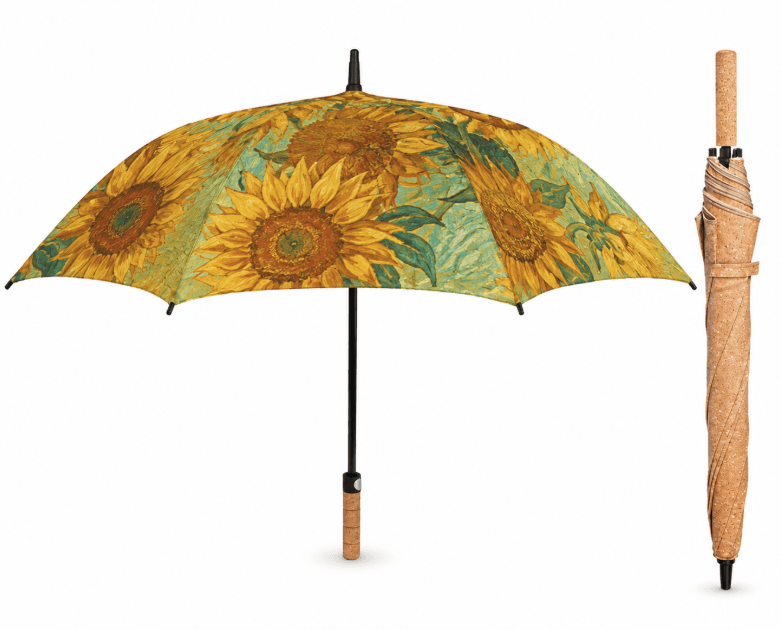
- A complete cork canopy
- Selected cork panels
- A cork handle
- A matching cork top cap
- Cork branding details
- A coordinated cork sleeve
After that, we can make a physical sample. You can feel the texture, check the colour and weight, examine the workmanship and test the umbrella before approving production.
HF Umbrella has more than 30 years of experience in custom umbrella manufacturing. As one of the early manufacturers to develop cork applications for umbrellas, we understand that cork requires a different approach from ordinary canopy fabric.
If you are looking for a cork umbrella manufacturer or want to develop a custom cork umbrella, talk to us before you finalise the product structure. A short review at the beginning can prevent expensive changes later.
Frequently Asked Questions
Can cork cover the complete umbrella canopy?
Yes. We can use flexible cork textile for a complete canopy. However, straight and walking umbrellas usually suit full cork canopies better than very compact folding models.
Does the cork come from the tree trunk?
No. HF Umbrella uses imported cork material made from the bark of cork oak trees. When workers harvest the bark correctly, the tree remains alive and grows a new outer layer.
Can you print our logo on cork?
Yes. However, the best branding method depends on the cork texture and artwork. Options include printing, laser engraving, metal badges and branded straps.
Is a cork umbrella completely waterproof?
Cork naturally resists moisture. Nevertheless, the backing, seams, centre cap and overall construction determine the water performance of the completed umbrella.
Do we need to make a sample?
Yes. We strongly recommend a physical sample because digital images cannot fully show the cork texture, colour, weight and folding behaviour.