
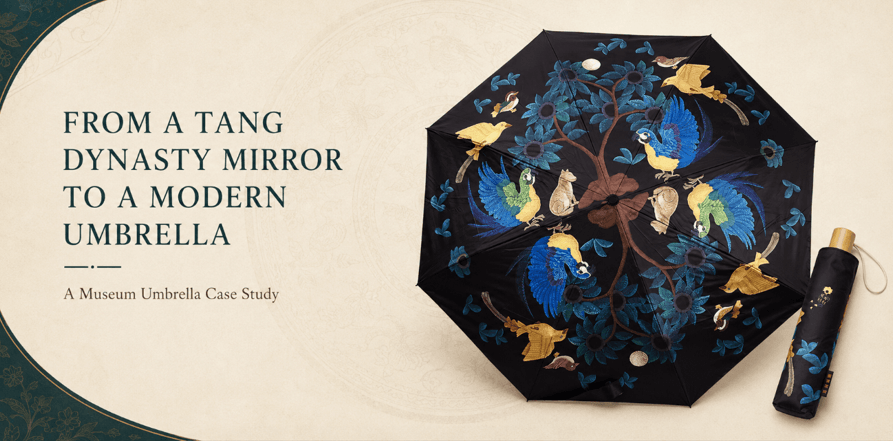
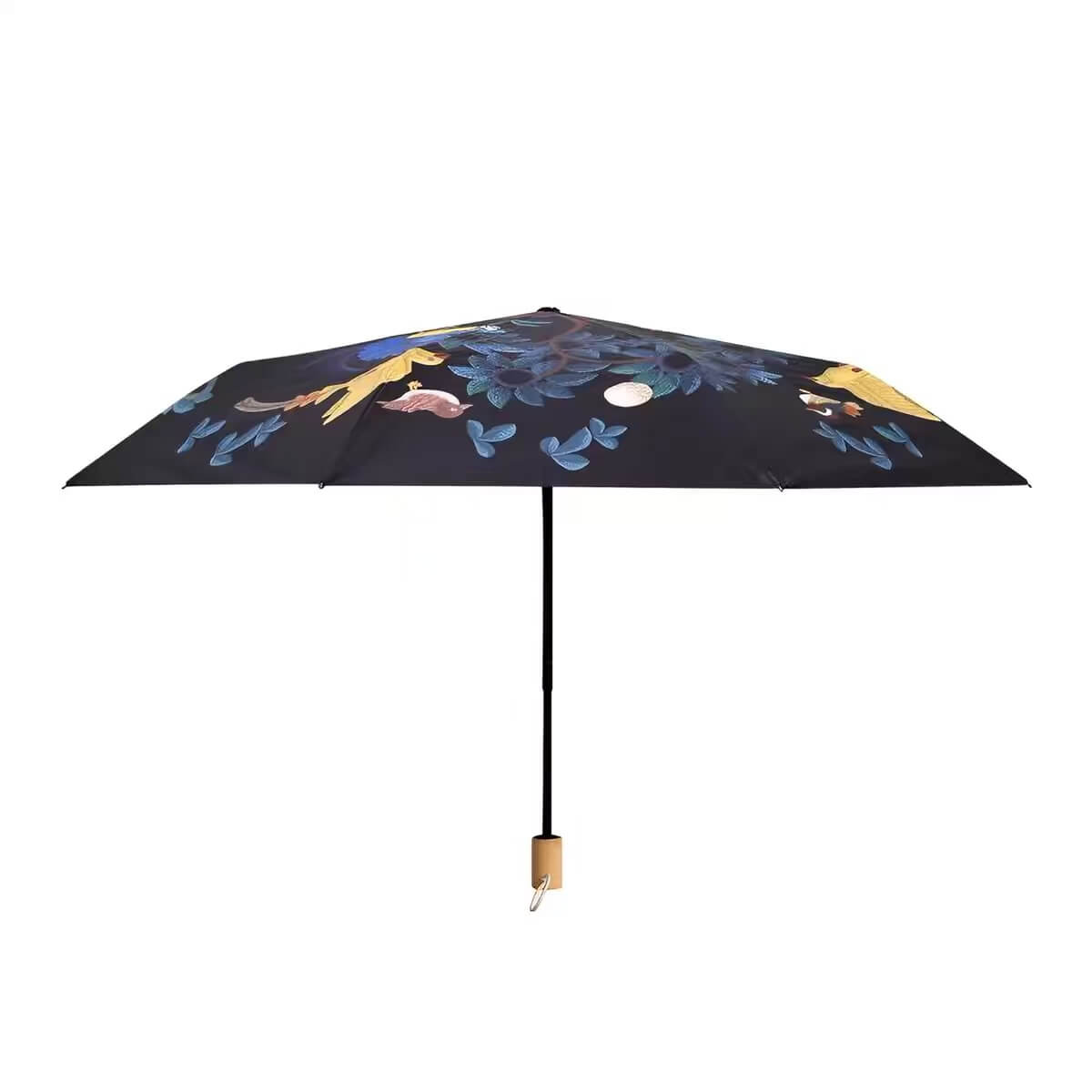
This is a folding umbrella we produced for the National Museum of China.
Its design was inspired by the Bronze Mirror Inlaid with Mother-of-Pearl in Flower, Bird and Figure Motifs (花鸟人物螺钿青铜镜), a Tang Dynasty artefact in the museum’s collection.
Dating to AD 756, the original mirror is decorated with figures sitting beneath a flowering tree, accompanied by birds, rocks, water and a moonlit sky. The decoration was created using luodian, a traditional craft in which thin pieces of polished shell are cut and inlaid into an object’s surface.
The shell changes colour as light moves across it. That rich, layered appearance is part of what makes the original mirror so beautiful—and also what made this umbrella challenging to produce.
The original artefact can be viewed on the National Museum of China website.

Turning a Round Mirror into an Eight-Panel Canopy
The circular shape of the mirror made it a natural starting point for an umbrella. However, we could not simply enlarge the original image and print it directly onto the fabric.
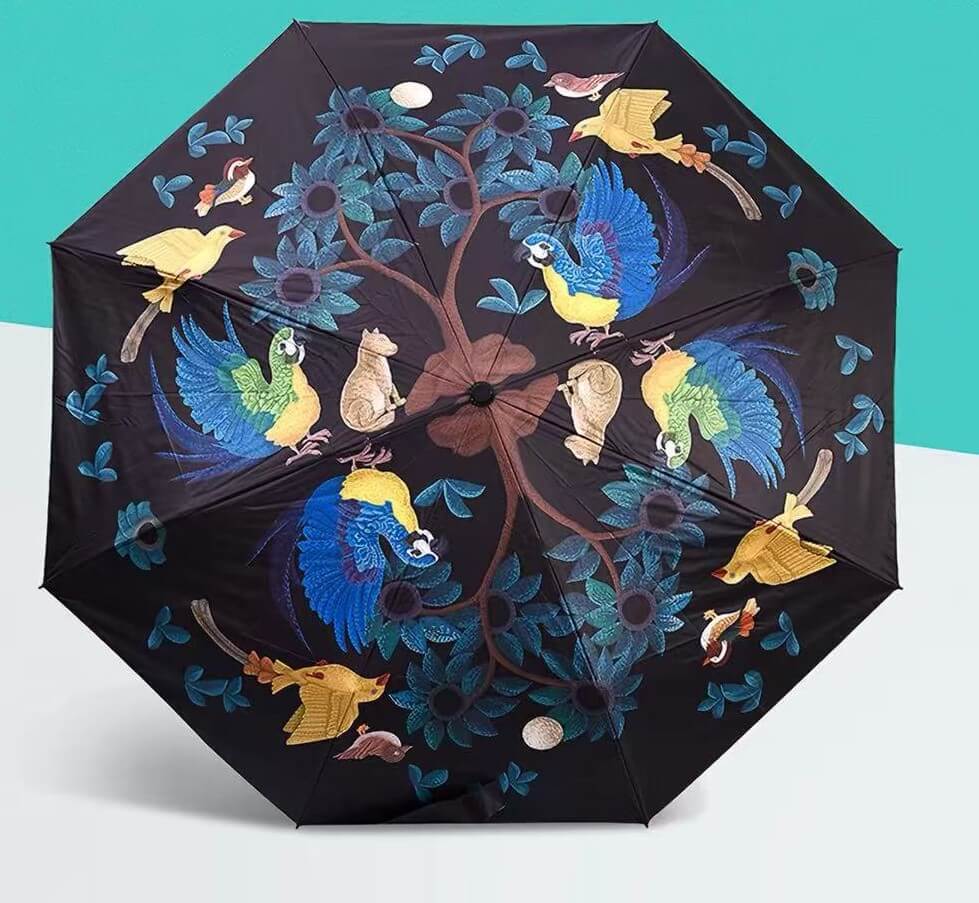
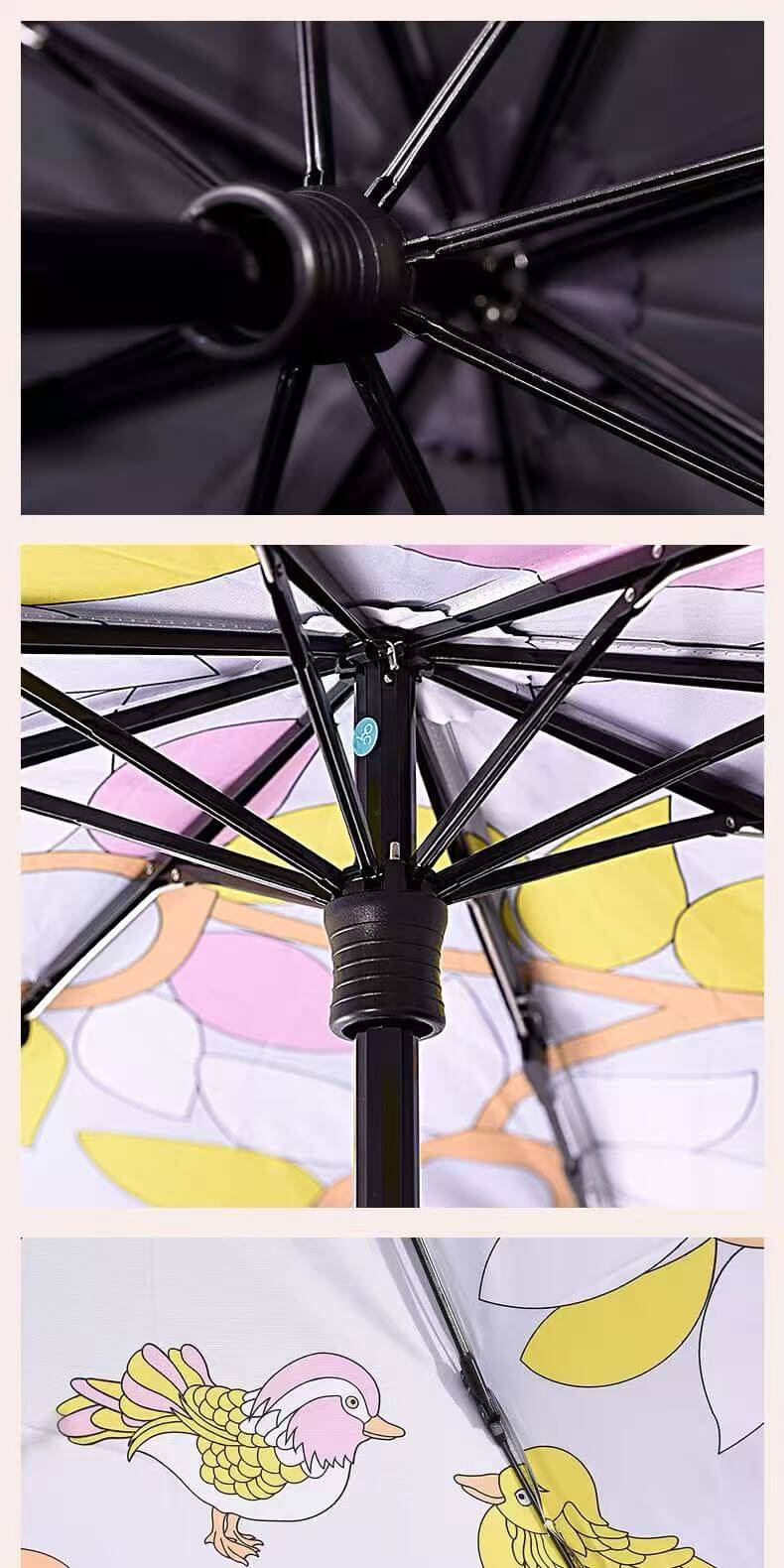
A folding umbrella canopy is made from eight separate panels. Every panel has seams along both sides, with ribs underneath and a cap in the centre. Important parts of the artwork can easily be cut, covered or distorted if the layout is not prepared correctly.
Before production, we checked how the branches, leaves and birds would sit across the panels. We kept the main birds away from the seams where possible and allowed the branches to connect the separate sections visually.
The black background was also important. It brings out the blue, green, gold and brown details while giving the canopy a finish closer to the depth of the original artefact.
When the umbrella is fully open, the eight panels come together as one circular picture—echoing the shape of the bronze mirror.
Colour Reproduction Required More Than a Screen Preview
Museum artwork often contains subtle colours and small details. What looks good on a computer screen does not always look the same when printed on umbrella fabric.
Fabric texture, coating, ink and lighting can all affect the final result. Deep blue and green details may disappear into a dark background, while lighter colours can become too bright after printing.
For this reason, we do not judge detailed cultural artwork only from a digital mock-up. We check the printing file, print resolution, panel positions and colour balance before bulk production. A physical sample allows the client to review the real colours and details on the actual fabric.
This is especially important for museum and art products. The aim is not to claim that fabric can reproduce every material effect of mother-of-pearl. It cannot. The aim is to retain the character, contrast and key visual details of the original design as faithfully as the chosen printing method allows.
A Cultural Product People Can Actually Use
The umbrella was designed as a retail product, not only as a display piece.
We used a lightweight folding frame so it could fit easily into a handbag or backpack. The canopy offers UPF 50+ protection, making the umbrella useful in both rain and strong sunlight.
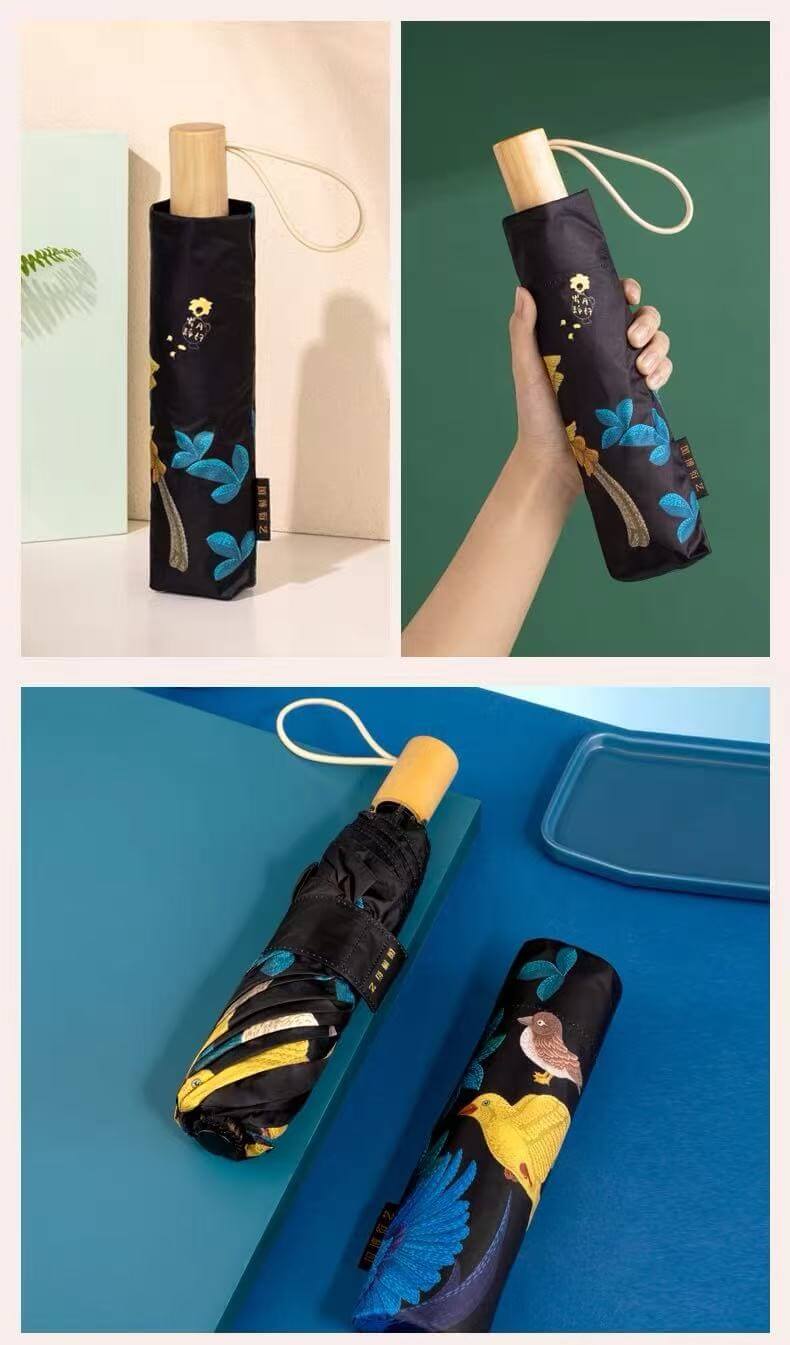
A natural wooden handle was selected instead of a standard plastic handle. It feels warmer in the hand and suits the traditional character of the artwork.
The matching sleeve carries elements from the same pattern. Therefore, the design remains recognisable even when the umbrella is folded.
Product details
- Lightweight folding structure
- Eight-panel full-canopy artwork
- UPF 50+ sun protection
- Waterproof canopy fabric
- Natural wooden handle with carrying loop
- Coordinated printed storage sleeve
- Compact size for daily use and museum retail
What Museum Buyers Need to Consider
Producing a museum umbrella is different from printing a logo on a standard promotional umbrella.
A logo normally occupies one or two panels. Museum artwork may cover the entire canopy, so the panel layout, seams, folds and colour relationships all affect the result.
Before sampling, we normally review:
- The resolution and format of the original artwork
- Which parts of the image must remain fully visible
- How the design connects across eight panels
- Colours that may change when printed on coated fabric
- The appearance of the umbrella when both open and folded
- The relationship between the canopy, sleeve and handle
- Packaging and labelling requirements for museum retail
For detailed artwork, we recommend producing a physical sample before bulk production. Our normal sample lead time is around 3–5 days after the production-ready artwork is confirmed, although complex designs or special components may require more time.
We also support small production runs. The usual minimum order starts from 50 umbrellas, depending on the umbrella structure, printing method and number of designs. This allows museums and cultural brands to test a new collection without committing immediately to a very large quantity.
What We Learned from This Project
A successful museum product should do more than reproduce an image.
It must respect the original artwork, work with the structure of the product and remain practical enough for people to use regularly.
This umbrella does not attempt to replace the experience of seeing the original bronze mirror. Instead, it gives people another way to discover its story.
Someone may first choose the umbrella because of its birds, colours or wooden handle. Later, they may want to know where the design came from and learn about the Tang Dynasty mirror behind it.
That is when a museum product becomes more than a souvenir.
Custom Umbrellas for Museums, Galleries and Cultural Brands
HF Umbrella has more than 39 years of experience producing custom umbrellas. We work with museums, galleries, artists and cultural brands on full-canopy printing, detailed artwork, coordinated sleeves and custom product specifications.
If you are developing an umbrella based on a collection or artwork, send us the original design, required quantity and preferred delivery date. We can review the artwork and explain what will—and will not—work before sampling begins.