
A practical guide to lab dips, lighting and fabric differences
Matching a custom umbrella to a brand color sounds simple: provide a Pantone number, approve the color and start production.
In practice, it is more complicated.
A Pantone number does not guarantee that umbrella fabric will look exactly the same as a paper color chip, a computer screen or another branded product. Fabric construction, coating, lighting, dyeing conditions and even the tension of an opened umbrella can all affect the final appearance.
For brands with strict color requirements, the safest process is:
Confirm the Pantone reference → Select the fabric → Make Lab Dips → Approve a physical swatch → Compare bulk production with the approved sample
This guide explains how professional color matching works in custom umbrella manufacturing—and how to avoid expensive misunderstandings before production begins.
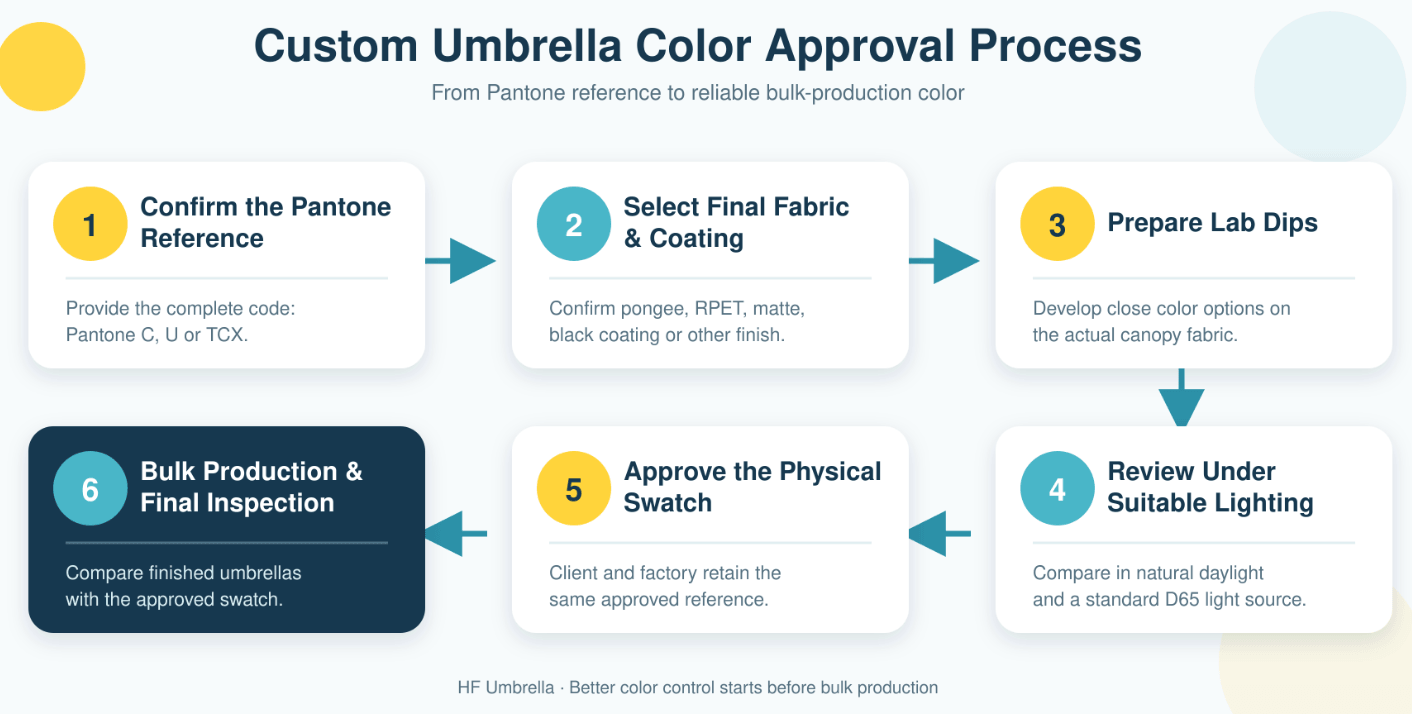
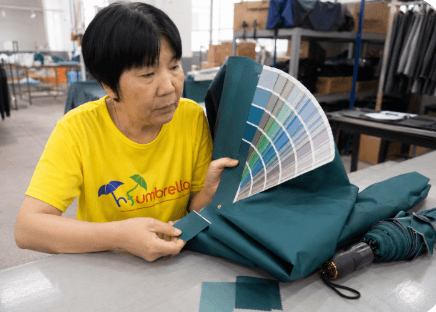
Table of Contents
Why Can’t Umbrella Fabric Match a Pantone Chip Perfectly?
Pantone provides a standardized color reference, but the Pantone chip and umbrella fabric are made from completely different materials.
A Pantone Formula Guide is printed on paper. An umbrella canopy is normally made from woven polyester, pongee, RPET or another textile. The surface texture and light reflection are different.
As a result, the same color may appear:
- Darker on dense fabric
- Lighter on thin fabric
- Duller on matte fabric
- Brighter on shiny polyester
- Warmer under indoor lighting
- Cooler in daylight
- Different after a coating is applied
Pantone is therefore the starting reference, not an automatic guarantee of an identical visual result.
Which Pantone System Should Be Used for Custom Umbrellas?
Clients commonly provide Pantone C, Pantone U or Pantone TCX references. They are not interchangeable.
| Pantone system | Original application | Use for umbrellas |
|---|---|---|
| Pantone C | Printing on coated paper | Commonly used as a brand-color reference |
| Pantone U | Printing on uncoated paper | Useful when a softer, less saturated appearance is required |
| Pantone TCX | Dyed textiles | Often more relevant for fabric color development |
| RGB or HEX | Digital screens | Not reliable as the only production reference |
| CMYK | Commercial printing | Useful for printed artwork, but not sufficient for dyed-fabric approval |
Pantone C is frequently used in promotional umbrella projects because many brand guidelines specify coated Pantone colors. However, Pantone TCX may provide a more appropriate textile reference when the canopy fabric itself is being dyed.
If the client only has a HEX, RGB or CMYK value, we can use it as an initial reference, but a physical color approval is strongly recommended before production.
What Is a Lab Dip?
A Lab Dip is a small piece of fabric dyed to match a requested color.
It allows the client and manufacturer to review how the selected color performs on the actual umbrella material before bulk fabric is dyed.
A Lab Dip is especially important when:
- The umbrella must match a corporate identity
- The color is light, fluorescent or highly saturated
- Different materials are used on the same umbrella
- The canopy includes a waterproof or UV-protective coating
- The order quantity is large
- The umbrella will be displayed beside other branded products
We normally develop several closely related color options because a Pantone color cannot always be reproduced perfectly on a particular fabric.
The client can then select the closest and most suitable option.
How HF Umbrella Handles Lab Dip Approval
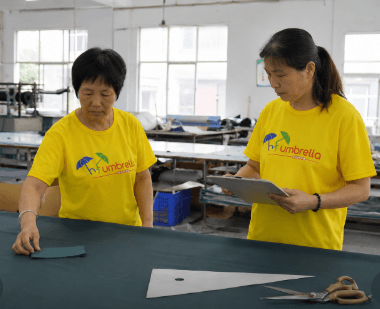
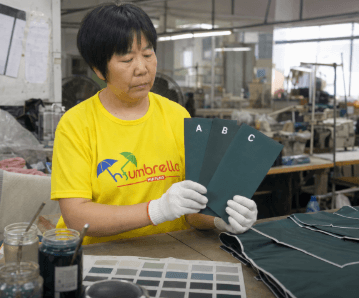
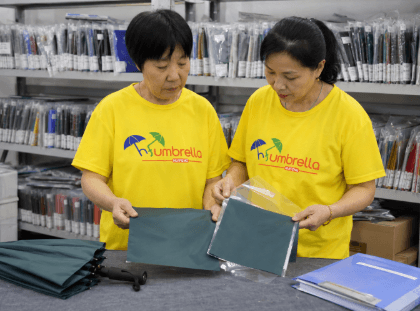
For custom-dyed umbrella fabric, HF Umbrella normally prepares several closely related Lab Dip options for comparison. Each option is produced on the same fabric intended for bulk production, because fabric construction, surface finish and coating can all affect the final appearance.
Lab Dip development normally takes around five working days, depending on the fabric and color complexity. If none of the initial options is acceptable, the dyeing formula can be adjusted before bulk fabric is produced.
Once a color is approved, both the client and HF Umbrella retain the confirmed physical swatch. The approved swatch—not a photograph or computer screen—then becomes the reference for bulk fabric and final production inspection.
Before the fabric is released for cutting, we check:
- The bulk fabric against the approved Lab Dip
- The color under suitable lighting
- Color consistency across the production roll
- The effect of any black, silver or UV coating
- The appearance of the fabric on the completed umbrella
This process helps identify color differences before the fabric becomes hundreds or thousands of finished umbrellas.
Pantone Number Only vs. Physical Lab Dip Approval
| Pantone Number Only | Physical Lab Dip Approval |
|---|---|
| Provides a general color target | Shows the color on the actual production fabric |
| Does not reflect fabric texture or coating | Includes the effect of fabric construction and finish |
| Often reviewed through an uncalibrated screen | Can be evaluated under suitable lighting |
| Cannot show how dyeing will perform | Confirms an achievable production result |
| Leaves room for different interpretations | Creates a shared physical approval standard |
| Color problems may appear after bulk dyeing | Differences can be corrected before production |
A Pantone number tells the factory where to aim. An approved physical Lab Dip confirms what the selected umbrella fabric can actually achieve.
The Recommended Color-Approval Process
1. Provide the Correct Color Reference
Send the Pantone number together with the Pantone system, for example:
- Pantone 186 C
- Pantone 2965 U
- Pantone 19-4052 TCX
Writing only “Pantone 186” is incomplete because different Pantone systems may show different versions of the color.
If possible, also provide:
- The original brand guideline
- A physical packaging or fabric sample
- A reference product
- Information about where the umbrella will be used
A photograph can help us understand the intention, but it should not be treated as the final color standard.
2. Confirm the Umbrella Fabric
Color should be developed on the same material intended for bulk production.
The result may change when switching between:
- 190T polyester
- 210T pongee
- 260T pongee
- RPET fabric
- Matte fabric
- Shiny polyester
- Black-coated fabric
- Silver-coated fabric
- PU-coated fabric
Approving a color on one material and producing it on another creates unnecessary risk.
3. Produce the Lab Dips
The dyeing mill prepares several color options based on the requested Pantone reference.
Each swatch should be clearly identified so the client can approve a specific option without ambiguity.
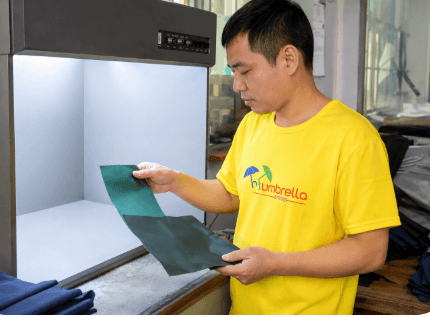
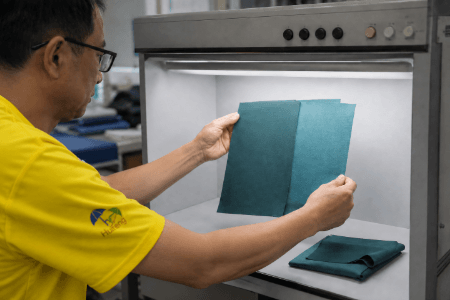
4. Compare the Colors Under Suitable Lighting
Color should be checked under more than one lighting condition.
At minimum, review the swatches in:
- Natural daylight
- Standard daylight simulation, such as D65
- The lighting used in the final retail or event environment, when relevant
A color that matches well in daylight may appear noticeably different under warm office, exhibition or retail lighting. This effect is known as metamerism.
5. Approve a Physical Swatch
For color-sensitive projects, approval should be based on a physical Lab Dip—not a photograph viewed on a phone or computer.
Screens vary in brightness, color temperature and calibration. Cameras also automatically adjust exposure and white balance.
A digital image can confirm general direction, but it cannot reliably approve a precise production color.
6. Keep the Approved Swatch as the Production Standard
After approval, one confirmed swatch should be kept by the client and another by the factory.
The factory uses its copy to compare:
- Bulk fabric
- Printed panels
- Sewn umbrella canopies
- Final production samples
This creates a clear, shared reference if questions arise later.
Why Does the Same Color Look Different on Different Umbrella Fabrics?
The following factors can change the appearance of a color.
Fabric Density
A dense 210T or 260T fabric may appear richer or darker than a lighter fabric because less light passes through it.
Yarn and Weave
The thickness, shape and arrangement of the yarn affect how the surface reflects light. Two fabrics dyed with a similar formula can therefore look different.
Surface Finish
A shiny surface reflects more direct light and can make a color appear brighter. A matte finish absorbs and scatters more light, creating a softer appearance.
Waterproof Treatment
Water-repellent finishing can slightly affect the surface appearance, particularly on dark or highly saturated colors.
Black, Silver and UV Coatings
A coating applied to the reverse side of the canopy may influence how the color appears from the outside.
Black coating normally increases opacity and may make some colors look deeper. Silver coating can create a different reflective effect. The final color should therefore be evaluated on the completed coated material—not only on unfinished fabric.
RPET Fabric
RPET can achieve attractive and consistent colors, but its recycled yarn structure may reflect light differently from conventional polyester.
If the project changes from virgin polyester to RPET, a new color check is recommended. Buyers can also review our sustainable umbrella material options.
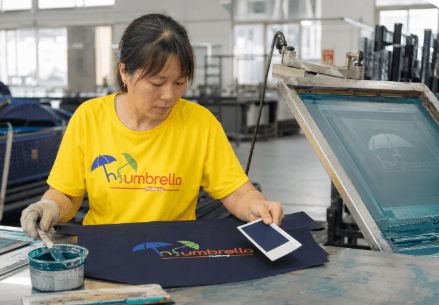
Dyed Fabric and Printed Color Are Not the Same
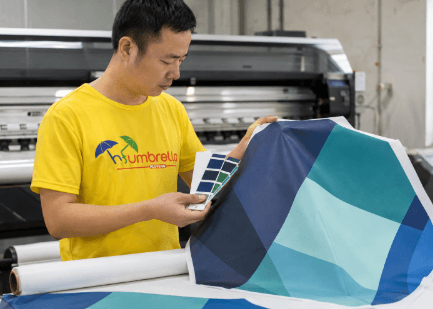
Custom umbrellas may use either dyed fabric or printed fabric.
With dyed fabric, the yarn or finished textile absorbs the color. Dyed fabric is usually suitable for solid-color canopies and large production quantities.
With digital or sublimation printing, color is created through printing. This is often used for:
- Full-panel artwork
- Photographic images
- Gradients
- Multiple colors
- Different artwork on each panel
- Small production quantities
A Pantone color printed through CMYK conversion may not look identical to the same Pantone reference reproduced through fabric dyeing.
If dyed and printed parts appear on the same umbrella, slight differences may be unavoidable. Both components should be reviewed together during sampling.
Should Color Be Approved on Flat Fabric or a Finished Umbrella?
Ideally, both.
A flat fabric swatch is necessary for efficient color development, but the color may appear slightly different after the fabric is:
- Cut into panels
- Printed
- Sewn
- Stretched over the frame
- Viewed against the light
- Combined with a contrasting inner canopy
For important projects, we recommend the following approval sequence:
- Approve the Lab Dip
- Make a complete umbrella sample
- Check the opened umbrella under the intended lighting
- Confirm the sample before bulk production
The Lab Dip controls the fabric color. The complete sample confirms the overall visual result.
What Is a Reasonable Color Tolerance?
Textile dyeing is an industrial process, and very small variations can occur between production batches.
Color tolerance should therefore be agreed before production, particularly when the umbrella must match:
- Store fixtures
- Uniforms
- Product packaging
- Vehicle colors
- Existing merchandise
- A previous umbrella order
Visual approval against the confirmed Lab Dip is commonly used. For projects requiring more technical control, color may also be measured using a spectrophotometer and an agreed ΔE tolerance.
However, a ΔE number should not be selected without considering the fabric, color and intended use. Some visual differences are more noticeable on certain colors than others.
No responsible umbrella manufacturer should promise a “100% identical match” across paper, screens, textiles, coatings and different production batches.
The professional goal is to establish an approved physical standard and keep production within an agreed, commercially acceptable tolerance.
Common Color-Matching Mistakes
Approving Color from a Phone Screen
Phone displays may enhance saturation and contrast. Two people can view the same photograph on different devices and see noticeably different colors.
Providing a Pantone Number Without the System
Pantone C, U and TCX references are not the same. Always provide the complete code.
Changing the Fabric After Color Approval
A color approved on conventional polyester may look different on RPET, pongee or coated fabric.
Comparing Colors Under Only One Light Source
A match under warm office lighting may fail under daylight. Check the color under the lighting conditions that matter to the project.
Producing Bulk Fabric Without a Physical Approval
This may save several days initially, but it creates a much larger commercial risk if the final fabric does not meet expectations.
Expecting Dyed and Printed Components to Be Identical
Different production methods produce color differently. They should be coordinated and sampled, not assumed to match automatically.
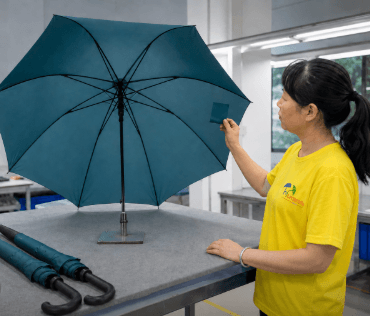
Color-Approval Checklist for Umbrella Buyers
Before approving production, confirm the following:
- Complete Pantone code and color system
- Final umbrella model
- Final canopy fabric
- Any black, silver or UV coating
- Dyed or digitally printed construction
- Physical Lab Dip approval
- Lighting conditions used for comparison
- Finished umbrella sample, if required
- Acceptable color tolerance
- Approved reference retained by both parties
This simple checklist can prevent delays, repeated sampling and disagreements during final inspection.
Frequently Asked Questions
Can you match a color from a photograph?
We can use a photograph as a visual reference, but it is not accurate enough for final production approval. A Pantone reference or physical sample is preferable.
Can you match a HEX or RGB color?
We can convert it into an approximate production reference, but HEX and RGB colors are created for screens. A physical Lab Dip should still be approved.
How long does a Lab Dip take?
Timing depends on the color, fabric and dyeing mill. Some colors require more than one development round before an acceptable match is achieved. The estimated time should be confirmed for each project.
Is a Lab Dip necessary for every umbrella order?
Not always. It may not be necessary when using a standard stock color or when the customer accepts a general color range. It is strongly recommended for custom-dyed fabric and strict corporate colors.
Can the color of a repeat order vary?
A small batch-to-batch variation is possible, especially when fabric is dyed at different times. Keeping the original approved swatch or production fabric helps the factory control repeat orders more effectively.
Can you guarantee an exact Pantone match?
We can develop the closest achievable match on the selected umbrella fabric. However, an exact visual match across paper, screens, dyed textiles, printed fabric and coated materials cannot be guaranteed.
Control the Color Before It Controls the Project
Color problems are much easier—and much less expensive—to solve before bulk production.
A professional approval process does more than identify a Pantone number. It connects the brand reference with the actual fabric, coating, printing method, lighting conditions and finished umbrella.
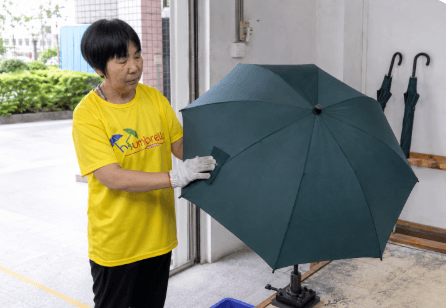
At HF Umbrella, we help clients evaluate these factors before production so that expectations are clear and the final result is more predictable. Our quality-control process uses the approved physical reference when colour is an agreed inspection requirement.
Send us your Pantone reference, umbrella model, quantity and fabric requirements. Review our custom umbrella development process or contact us for a colour-matching and sampling recommendation.