
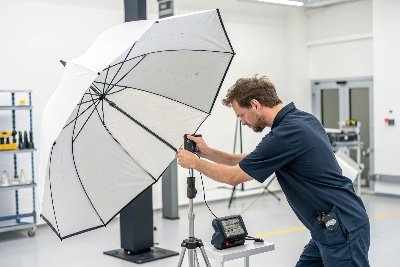
How to Test Umbrella Quality Before Ordering
You’ve reviewed samples.
Everything looks… fine.
But one question still remains:
How do you actually know if an umbrella is good — before placing the order?
This is where many projects go wrong.
The sample looks acceptable.
The price is competitive.
But after delivery, problems begin.
- “It leaks inside”
- “It feels cheap”
- “It broke after a few uses”
- “The logo faded or looked wrong”
At that point, it’s too late.
Table of Contents
A Simple Truth Most Buyers Learn the Hard Way
A sample that looks good is not enough.
A sample that performs well — that’s what matters.
Most issues only show up under real use.
So the key is simple: test before you order.
1. Fabric Check: 190T vs 210T
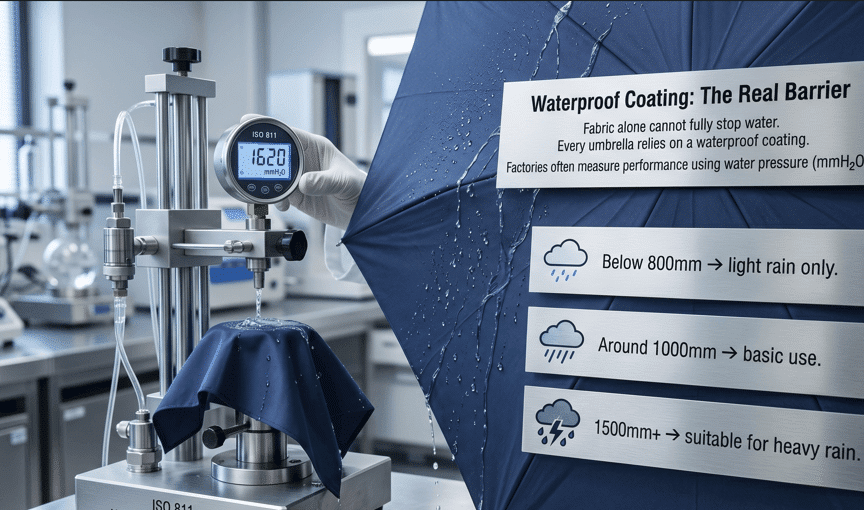
Fabric density affects how well an umbrella resists rain.
- 190T → lower density
- 210T → tighter weave, better resistance
Quick test:
- Hold the umbrella up to the light
- More light → lower density
- Less light → better quality
Lower-density fabric may look fine, but under heavy rain, water can push through.
2. Waterproof Test: Simulate Real Rain
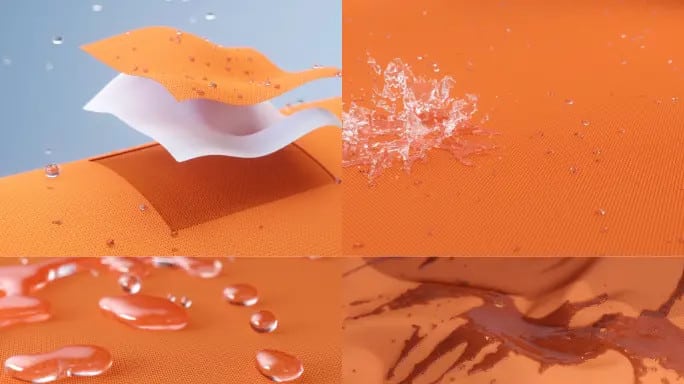
Don’t trust appearance — test it.
Simple method:
- Open the umbrella
- Pour water continuously (or use a shower)
- Observe inside for 1–2 minutes
Watch for:
- Damp areas
- Fine mist
- Water droplets
If you see any of these, the coating is not strong enough.

3. Stitching Check: Look at the Seams
Every umbrella is stitched, and every stitch creates a small hole.
Check:
- Are stitches tight and even?
- Are there visible gaps?
- Is the thread strong?
In many cases, water enters through seams — not fabric.

4. Top Leakage Test: The Most Overlooked Detail
This is one of the most important checks.
Focus on the top of the umbrella (where the shaft passes through).
Test method:
- Pour water around the top center
- Watch if water runs along the shaft
- Check if it drips inside
What to look for:
- Is there a proper top rosette (mushroom cap)?
- Does it redirect water outward?
Without this structure, even a good umbrella can leak.

5. Frame Strength Test: Can It Handle Real Use?
An umbrella must withstand wind and repeated use — not just rain.
Simple tests:
- Open and close multiple times
- Shake gently to check stability
- Apply light pressure to the canopy
- Simulate wind from different angles
Observe:
- Does the frame feel stable?
- Do ribs bend easily?
- Are joints firm or loose?
- Does it return to shape after pressure?
Why it matters:
- Weak ribs bend permanently
- Structure becomes unstable
- Lifespan is reduced
A strong frame is critical because rain often comes with wind.
6. Printing Quality Check: Does Your Logo Represent Your Brand?
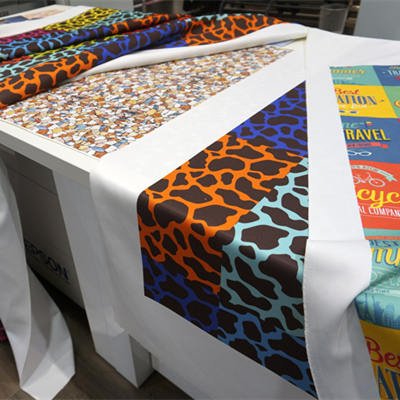
For many buyers, umbrellas are branding tools — not just functional products.
This is where cheap products fail most visibly.
Check:
- Is the logo sharp and clear?
- Are colors accurate and consistent?
- Are edges clean or blurry?
- Is printing aligned correctly across panels?
Durability test:
- Rub the printed area with a damp cloth
- Check if color fades or transfers
- Fold and reopen to see if cracking appears
Watch for:
- Faded colors
- Misalignment
- Cracking ink
- Uneven printing
If the printing looks cheap, your brand will feel cheap.
What Experienced Buyers Do Differently
They stop relying on:
- Appearance
- Price
- First impressions
And focus on:
- Real testing
- Performance under use
- Structural details
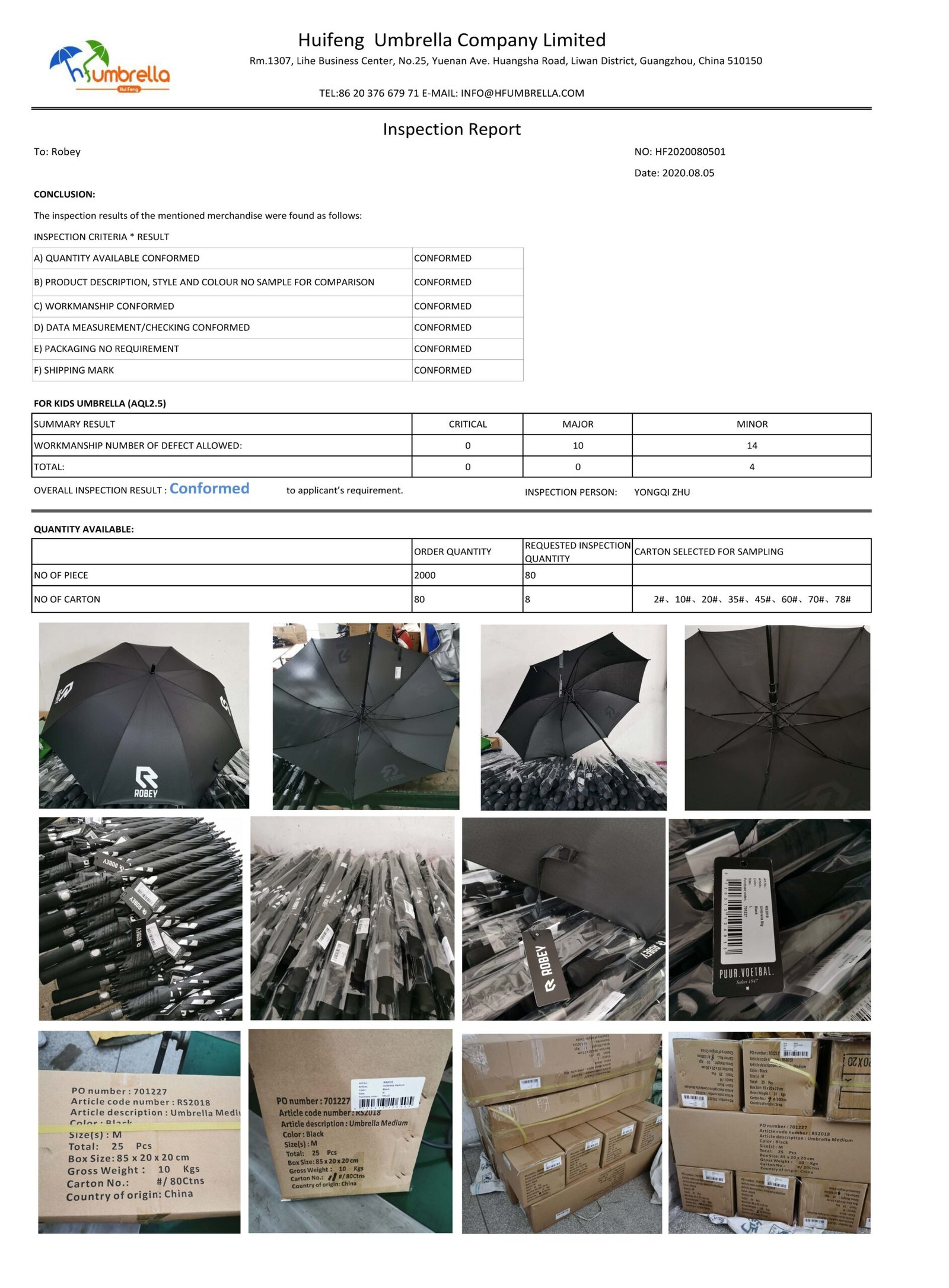
How We Approach It at HFumbrella
At HFumbrella, we’ve worked with many clients who faced these exact issues.
“The sample looked fine — but problems appeared after use.”
That’s why we always recommend:
Test before you trust.
Final Thought
Choosing an umbrella supplier is not just about price.
It’s about what happens after delivery.
A product that fails will always cost more in the end.
Need a Second Opinion?
If you’re unsure whether your sample meets these standards, we’re happy to help.
Send us your specs, photos, or videos.
We’ll review them and point out potential risks — no pressure, just practical insights.