
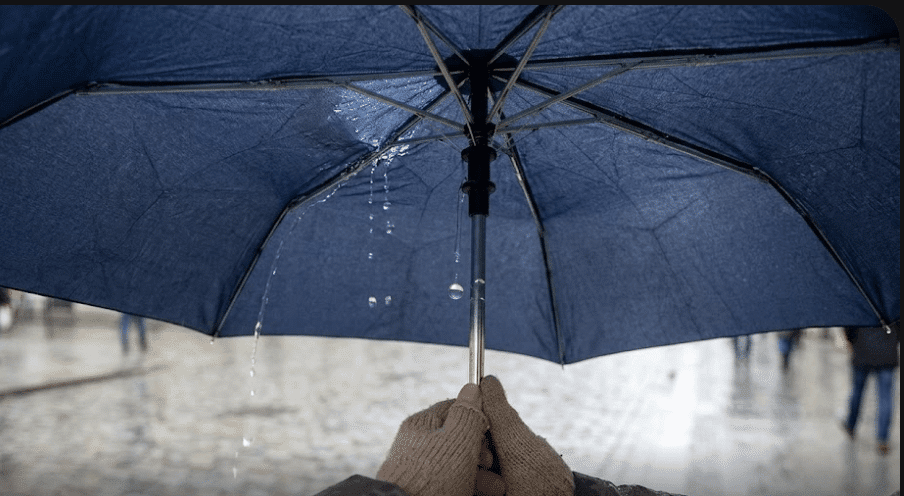
Why Do Umbrellas Leak Inside?
The logo looks great.
The colors match your brand perfectly.
Everything seems right.
Then the feedback starts coming in:
“It’s raining outside… but somehow it’s raining inside too.”
It’s frustrating.
Not just because of the product — but because it affects your brand, your reputation, and your customer trust.
The truth is, most of the time, this isn’t a random defect.
It’s something that was decided much earlier.
Table of Contents
It’s Not Broken — It Was Built That Way
When an umbrella leaks, people often assume something went wrong during production.
But in reality:
Most umbrellas that leak were never designed to handle heavy rain.
They may look fine.
They may pass a quick sample check.
But once they face real-world conditions — wind, pressure, continuous rain — their limitations start to show.
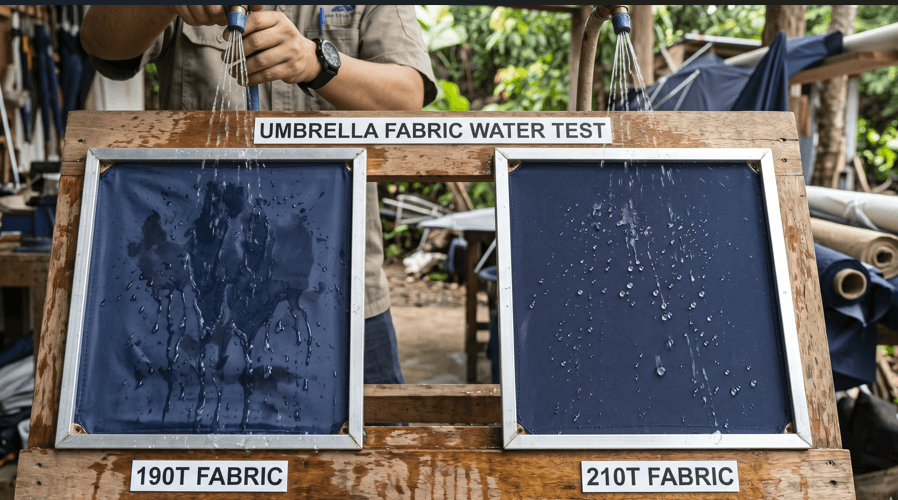
Fabric Density: 190T vs 210T Umbrella Fabric
One of the biggest differences in umbrellas is something you can’t easily see:
Fabric density
You might have heard terms like:
- 190T umbrella fabric
- 210T umbrella fabric
Without getting too technical:
- 190T → lower density, more gaps
- 210T → tighter weave, better resistance
In light rain, both may perform similarly.
But in heavy rain — especially with wind pressure — water can be pushed through the tiny gaps in lower-density fabric.
That’s when users feel like:
“The umbrella is leaking.”
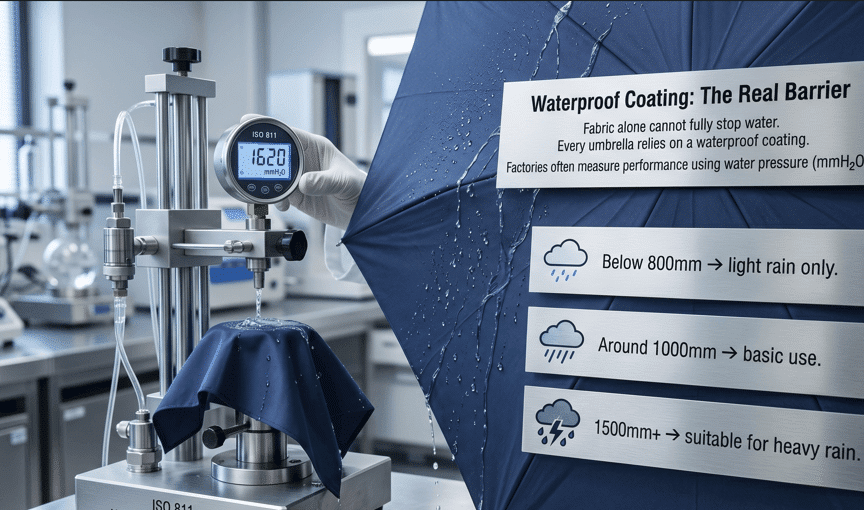
Waterproof Coating: The Real Barrier
Fabric alone cannot fully stop water.
Every umbrella relies on a waterproof coating.
Factories often measure performance using water pressure (mmH₂O).
- Below 800mm → light rain only
- Around 1000mm → basic use
- 1500mm+ → suitable for heavy rain
Many leaking umbrellas simply don’t meet the level required for real rain.
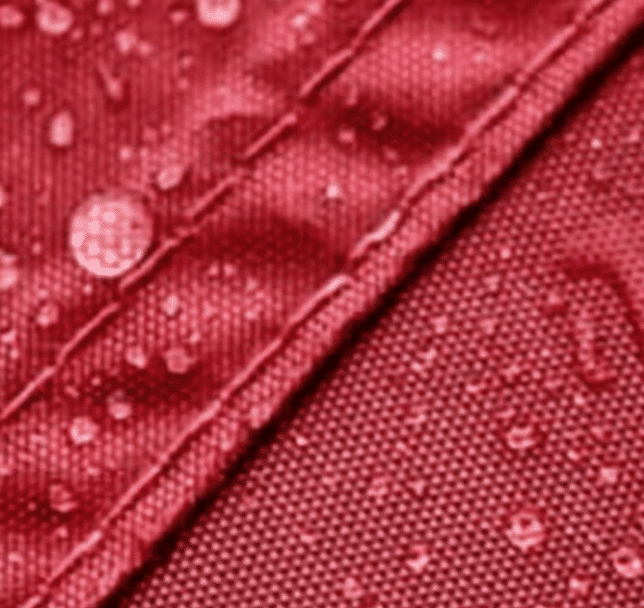
Stitching: Small Holes, Big Impact
Every umbrella is stitched together from multiple panels.
Each stitch creates a tiny hole.
Under pressure, these holes allow water to pass through.
Key factors include:
- Stitch density
- Thread quality
- Sewing consistency
Lower-cost umbrellas often reduce stitch density to save cost — and that’s where problems begin.
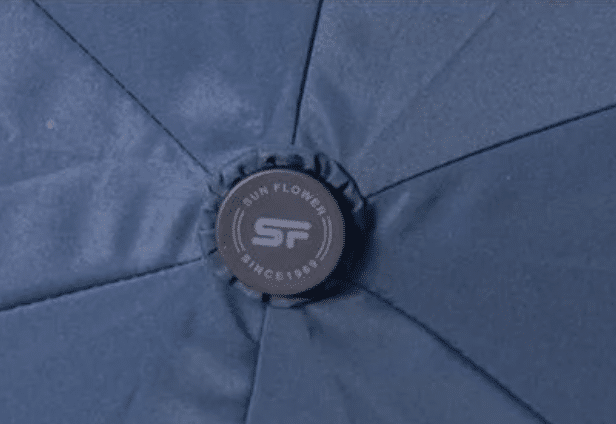
The Most Overlooked Part: The Umbrella Top
Now we come to the part most people never think about.
The top of the umbrella.
Where the shaft passes through the canopy.
During rain:
- Water flows toward the center
- Runs along the shaft
- Drips inside
A proper umbrella includes a top rosette structure to:
- Cover the opening
- Redirect water outward
- Prevent water from flowing inside
Without this, even good fabric cannot prevent leakage.

What Causes Umbrella Leaks?
In most cases, leakage is caused by a combination of:
- Low-density fabric (190T)
- Weak waterproof coating
- Loose stitching
- Poor top structure design
Each issue adds risk — together, they create failure.
A Different Way to Look at Umbrella Quality
Many buyers focus on price.
But when umbrellas are used as:
- Promotional products
- Corporate gifts
- Retail items
They represent your brand.
When they fail, customers don’t blame the factory — they remember you.
How We Approach It at HFumbrella
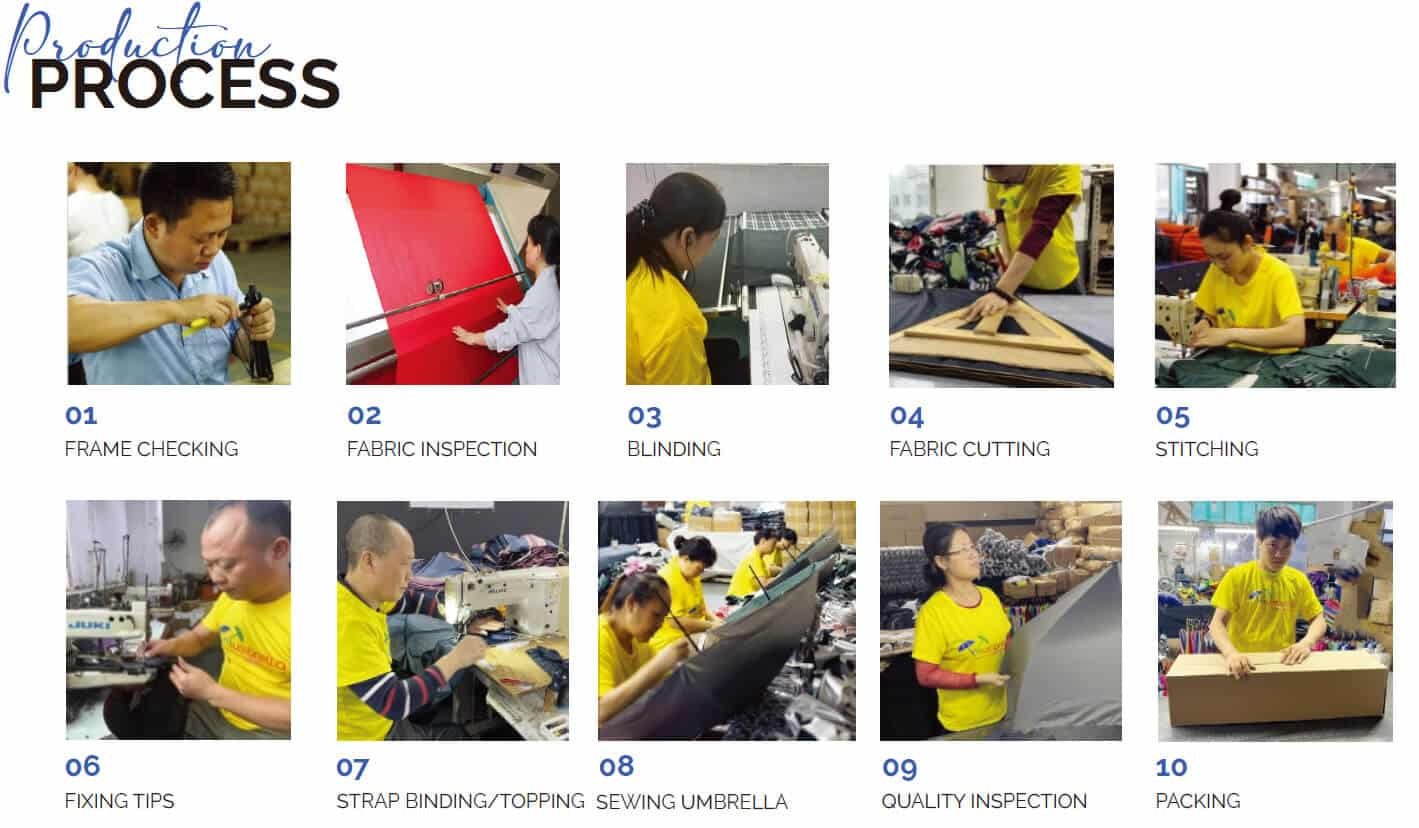
At HFumbrella, we focus on preventing problems before they happen.
- 210T high-density fabric
- Reliable waterproof coating
- Controlled stitching quality
- Reinforced top rosette structure
Not to make the cheapest product — but to make one that performs when it matters.
Final Thought
An umbrella is simple.
But the experience it creates is not.
When it works, nobody notices.
When it fails, everyone remembers.
Thinking About Your Next Umbrella Project?
If you’ve ever dealt with complaints like “leaking umbrellas,” you already know how small details can turn into bigger problems.
Feel free to share your specs or ideas with us.
We’ll point out potential risks based on real production experience — no pressure, no obligation.
Sometimes, a quick review early on can save a lot later.