
Material & Performance Guide | Author: Justin (HF Umbrella) | Updated for 2026
Teflon™ Coating in Umbrellas: Is It Worth the Extra Cost for Your Brand?
A practical, B2B-first breakdown of what premium water-repellent finishes actually do—and when they genuinely improve your ROI.
Decision Summary (Read this first)
- Choose a premium coating if your umbrella must stay clean, dry fast, and look “new” after repeated use (retail, hotel, golf, premium gifting).
- Skip the upgrade if this is a one-off event giveaway and you only need basic rain function.
- Don’t buy the word “Teflon”—buy a performance standard and a sample. That’s how you avoid marketing claims without real results.
Verify “Teflon™” claims
Sampling required
PTFE-based / high-grade water-repellent finish can be one of the easiest upgrades to improve the
user experience—especially for clients who hate dripping umbrellas.
Important note about the TEFLON™ name
TEFLON™ is a trademark. Using the TEFLON™ name typically requires a trademark license and correct labeling rules. :contentReference[oaicite:0]{index=0}
So, for B2B buyers, the smart move is simple:
- If your project needs the TEFLON™ brand on hangtags, confirm documentation and brand-usage requirements up front.
- If you only need the performance, specify performance targets (beading, drying time, stain resistance) and approve a physical sample.
Table of Contents
1) What a Premium Coating Actually Does
Most umbrellas look “waterproof” on day one. The real difference appears after repeated use—when cheap canopies start to feel damp,
hold stains, and dry slowly. In contrast, a premium finish works at the fiber level, so water has less chance to soak in.
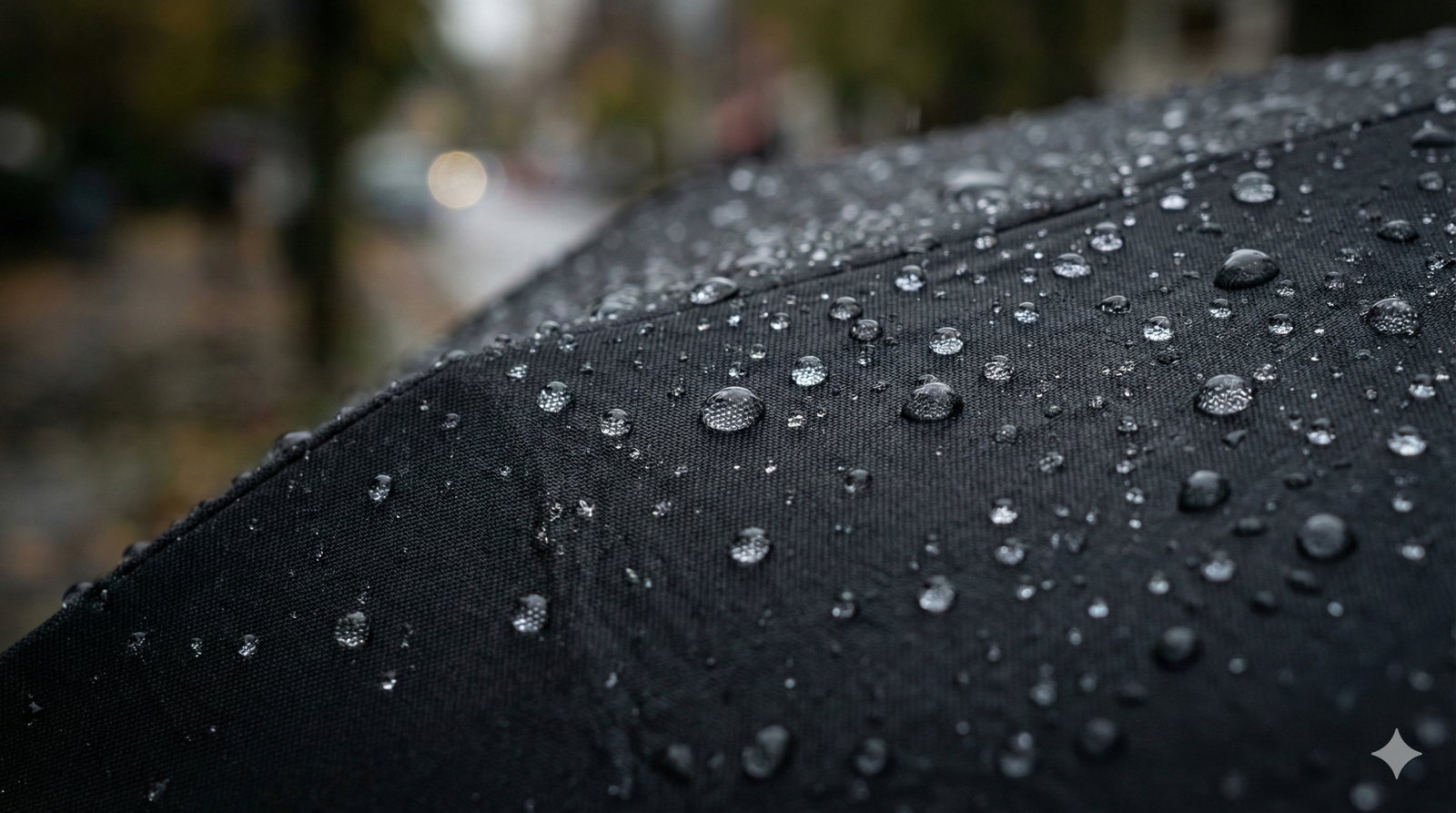
The “Lotus Effect” (water beading)
First, a good coating improves water repellency: droplets form beads and roll off faster. As a result, the user can shake the canopy
and walk indoors with less dripping.
Lower friction = less dirt sticking
PTFE is known for its low friction behavior, which is one reason it’s used in many applications where sticking and drag are problems. :contentReference[oaicite:1]{index=1}
In umbrella terms, that usually translates to easier cleaning and better “looks clean” performance—especially on light colors.
Justin’s factory perspective
If your client uses the umbrella every week, the “premium feeling” is not the logo. It’s the moment they shake it once and it’s
almost dry. That single moment sells quality better than any brochure.
2) The Business Case: When the Upgrade Pays for Itself
Let’s be direct: premium coating adds cost. Therefore, you should only pay for it when it protects margin, reputation, or repeat orders.
Here’s a simple way to decide.
| Use Case | Recommended? | Why |
|---|---|---|
| Luxury hotel / resort umbrella | Yes | Umbrellas get heavy use; faster drying + cleaner canopy protects brand image. |
| Retail brand (premium pricing) | Yes | Better perceived value and lower “this looks cheap” risk. |
| Golf club / golf event resale | Yes | Often stored in bags/trunks; reducing moisture retention helps avoid odor and complaints. |
| One-day promotional giveaway | Usually no | If it’s meant for short-term distribution, basic performance is often enough. |
Practical reminder: some suppliers market “Teflon” as a generic claim. For instance, premium umbrella canopies in the market may be described as using “TEFLON Fabric Protector,”
but you should still verify what was actually applied and how it’s documented.
3) How to Specify It Like a Pro Buyer
Instead of asking, “Do you have Teflon?”, use a spec-driven request. That way, you can compare suppliers fairly and avoid the “same word, different result” problem.
Step A: Define the performance target
- Water beading: water should bead and roll off after a light shake.
- Drying speed: canopy should feel less damp after normal use.
- Stain resistance: improve “easy wipe” performance on light-colored canopies.
Step B: Confirm fabric & printing compatibility
Next, match the coating with your fabric choice (Pongee, RPET, polyester) and your printing method (screen print, transfer, digital).
Coatings can change how ink behaves; therefore, sampling is not optional for premium branding.
Step C: Approve a physical sample from the right material lot
Finally, approve a pre-production sample and run a simple “shake-dry” comparison. If the upgrade is real, you will see it immediately.
If you plan to print “TEFLON™” on hangtags
Confirm brand usage and documentation before you print anything. TEFLON™ brand access is associated with licensing requirements. :contentReference[oaicite:3]{index=3}
If you don’t have that in place, keep your messaging to performance language like “water-repellent finish” or “PTFE-based treatment”
(based on what your supplier can legitimately support).
FAQ
Is Teflon™ coating the same as “waterproof”?
it helps water bead and roll off, so the canopy dries faster and feels cleaner.
How much extra does a premium coating cost?
that makes sense only when you sell premium or want fewer complaints/returns.
Will the coating make my logo print less durable?
durability is not a problem—but guessing is.
What’s the fastest way to verify the benefit?
Can HF Umbrella supply this kind of coating?
on hangtags or packaging, we can also align on documentation and labeling requirements before production.
Want to see the difference on camera?
Request a short demo of the “Shake-Dry” test and a pre-production sample, so you can approve performance before bulk production.
Tip: If yur CMS uses different slugs, just replace the URLs above with your actual page links
Disclaimer: TEFLON™ is a trademark and brand usage typically requires licensing and proper labeling. :contentReference[oaicite:4]{index=4}
This page is a manufacturing guide; always confirm compliance and documentation for your destination market.