
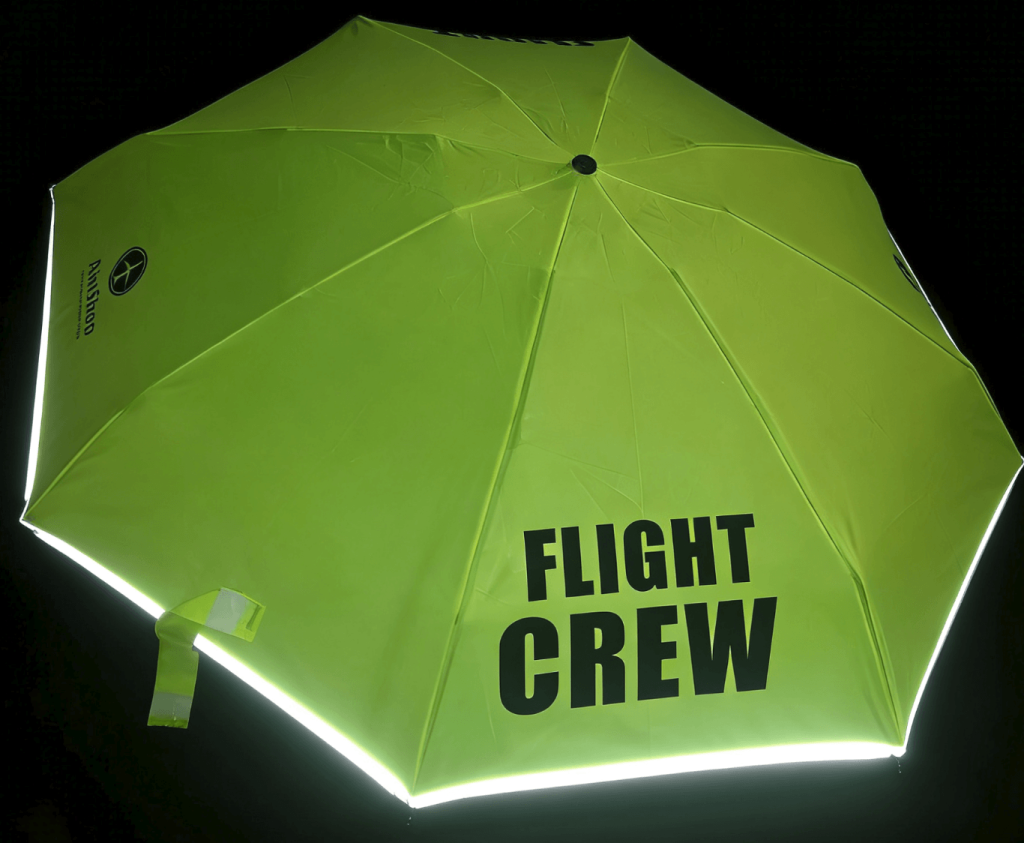
One Umbrella. Total Protection.
Table of Contents
HF Umbrella × Airline Crew Custom Project Case Study
This project demonstrates that high-performance umbrellas for professional environments require more than standard manufacturing. The final solution balanced safety, durability, and brand aesthetics through multiple engineering iterations and real-world testing.
Project Background
For airline crew, an umbrella is not a convenience—it is part of the uniform.
Crew members move between terminals and open tarmacs in harsh weather, low visibility, and time-sensitive conditions. As a result, the umbrella must function as both a tool and a brand element.
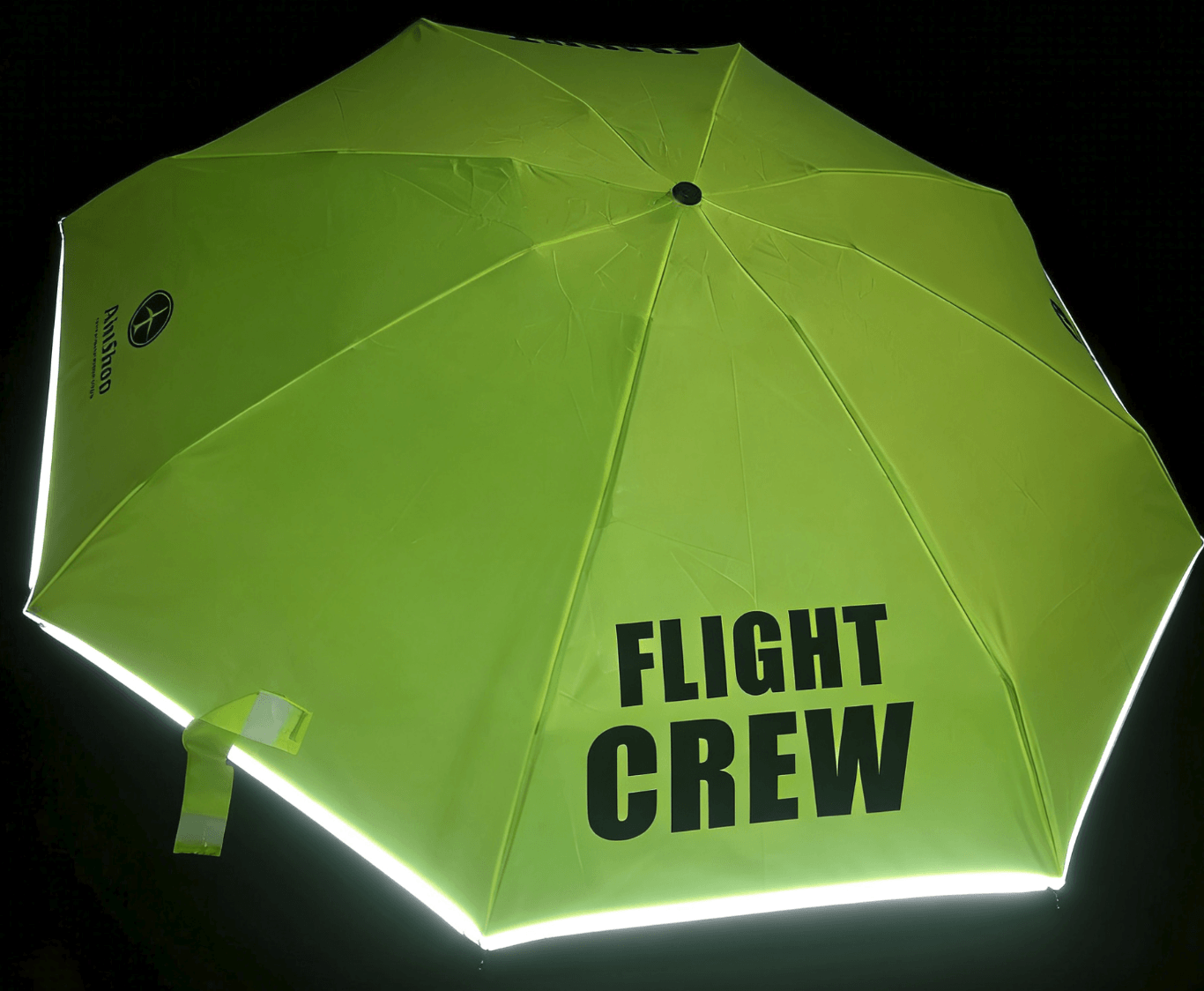
- High visibility at night
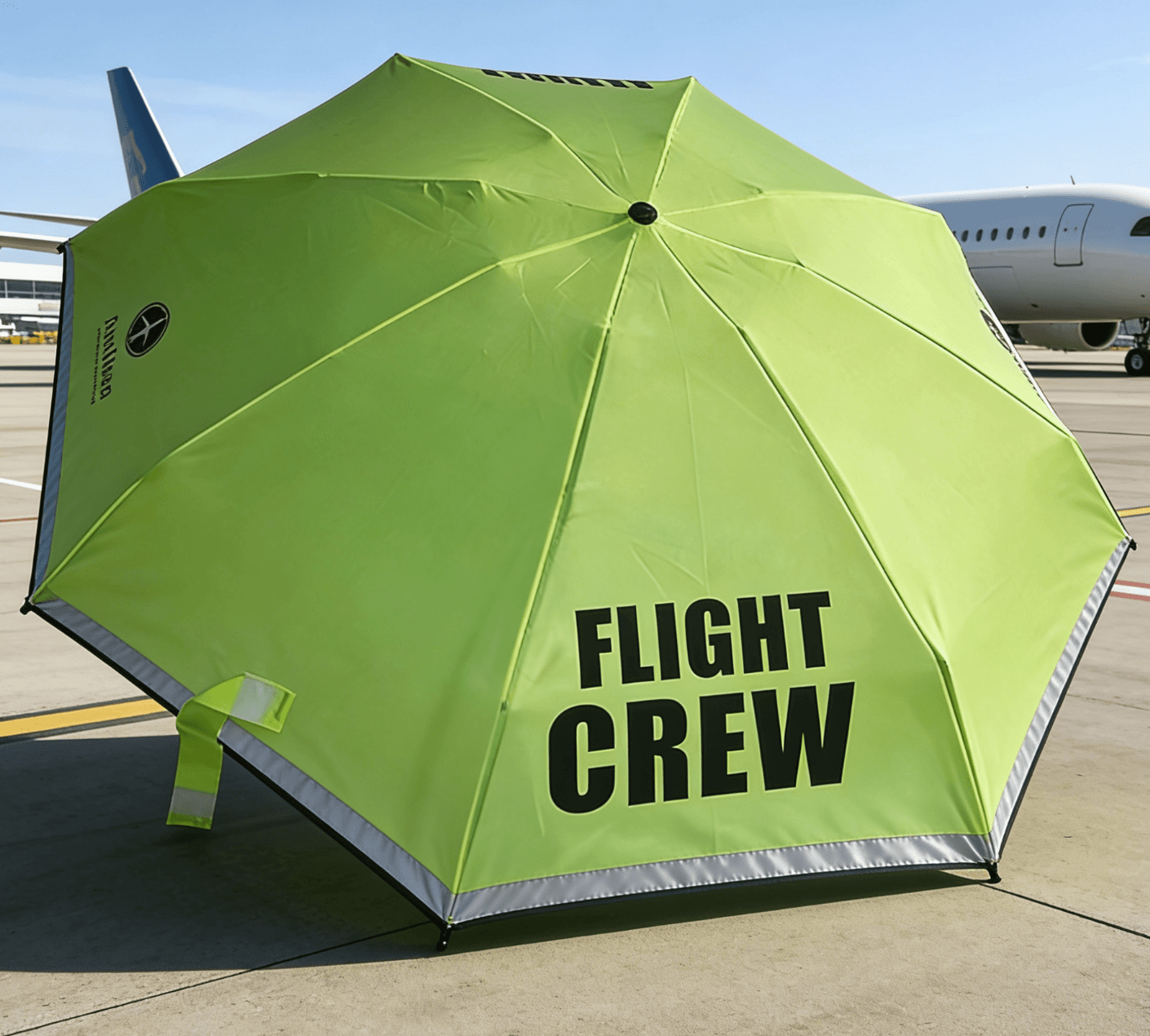
- Clean, non-reflective appearance during the day
- Strong wind resistance and durability
- Comfortable handling during long shifts
The airline approached HF Umbrella not for a standard product, but for a solution that integrates safety, usability, and brand identity.
The Challenge: Safety vs. Aesthetics
This project required solving multiple conflicting requirements:
1. Night Visibility vs. Day Appearance
Reflective materials must perform under strong light at night while remaining subtle, matte, and clean during the day.
2. Aviation-Level Durability
The umbrella must withstand frequent use, strong wind, and continuous exposure to rain.
3. Brand Consistency
Color accuracy and finish must align with strict airline brand guidelines.
4. Iteration Requirements
Details such as reflective flatness, opening smoothness, and grip comfort required repeated refinement.
Our Approach: Real Use-Case Engineering
At HF Umbrella, development starts from real usage scenarios.
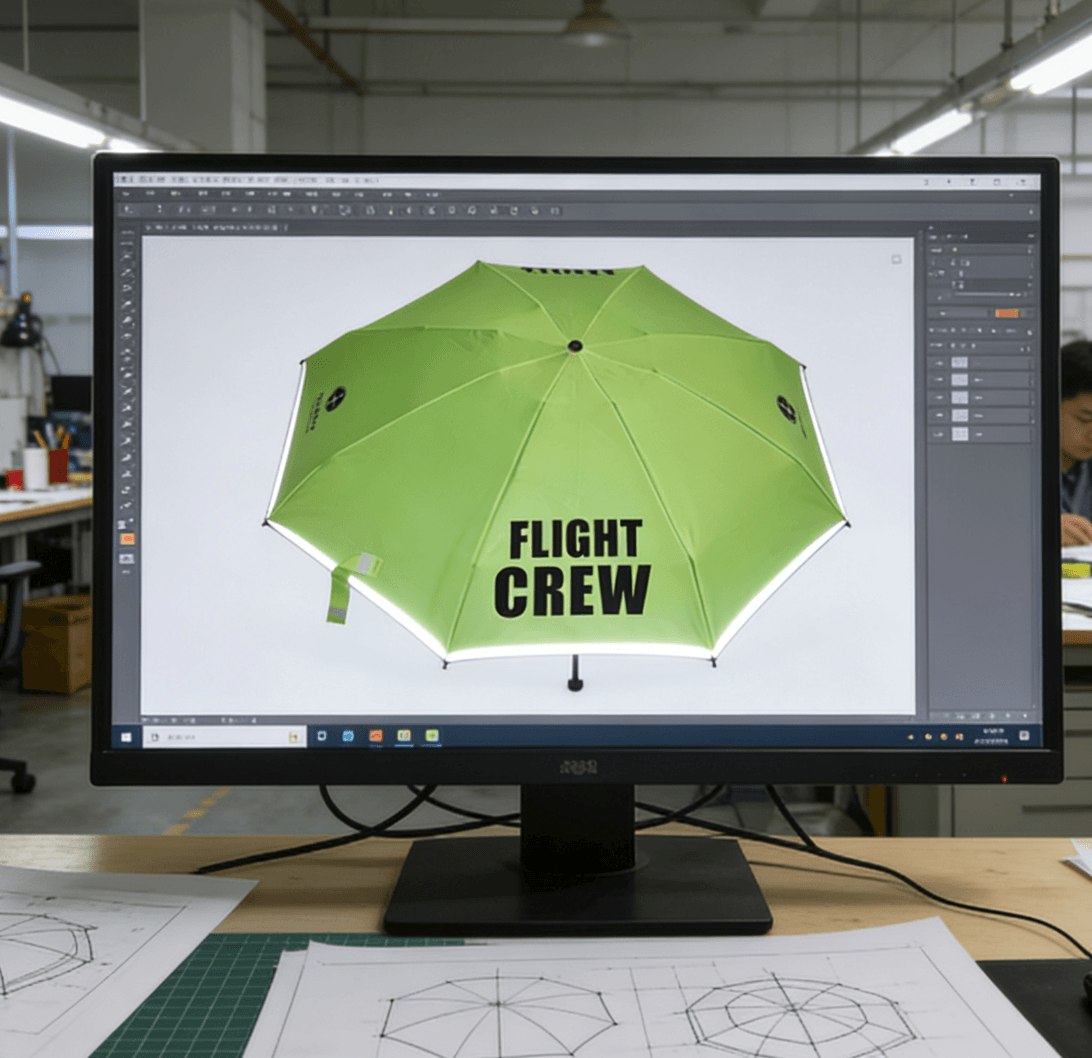
A cross-functional team (design, engineering, and quality control) analyzed crew workflows and translated them into technical requirements.
Every element—from frame structure to canopy tension—was optimized for real-world performance rather than catalog specifications.
Iteration 1: Solving the Reflective Paradox
The first prototype did not meet expectations:
- Visible wrinkles on reflective strips
- Excessive glare in daylight
Solution:
- Upgraded to high-density reflective material
- Redesigned bonding process
Result:
- Daytime: matte, clean, non-reflective
- Night: high visibility under strong light
Iteration 2: Structural Upgrade
- Frame: Fiberglass ribs for flexibility and wind resistance
- Fabric: High-density water-repellent canopy
- Handle: Ergonomic anti-slip grip
The final structure ensured durability while maintaining a professional appearance.
Iteration 3: Detail Optimization
After functionality was achieved, the focus shifted to refinement:
- Adjusting reflective strip positioning
- Eliminating micro-wrinkles
- Fine-tuning color and logo placement
Multiple sampling rounds ensured consistency before final approval.
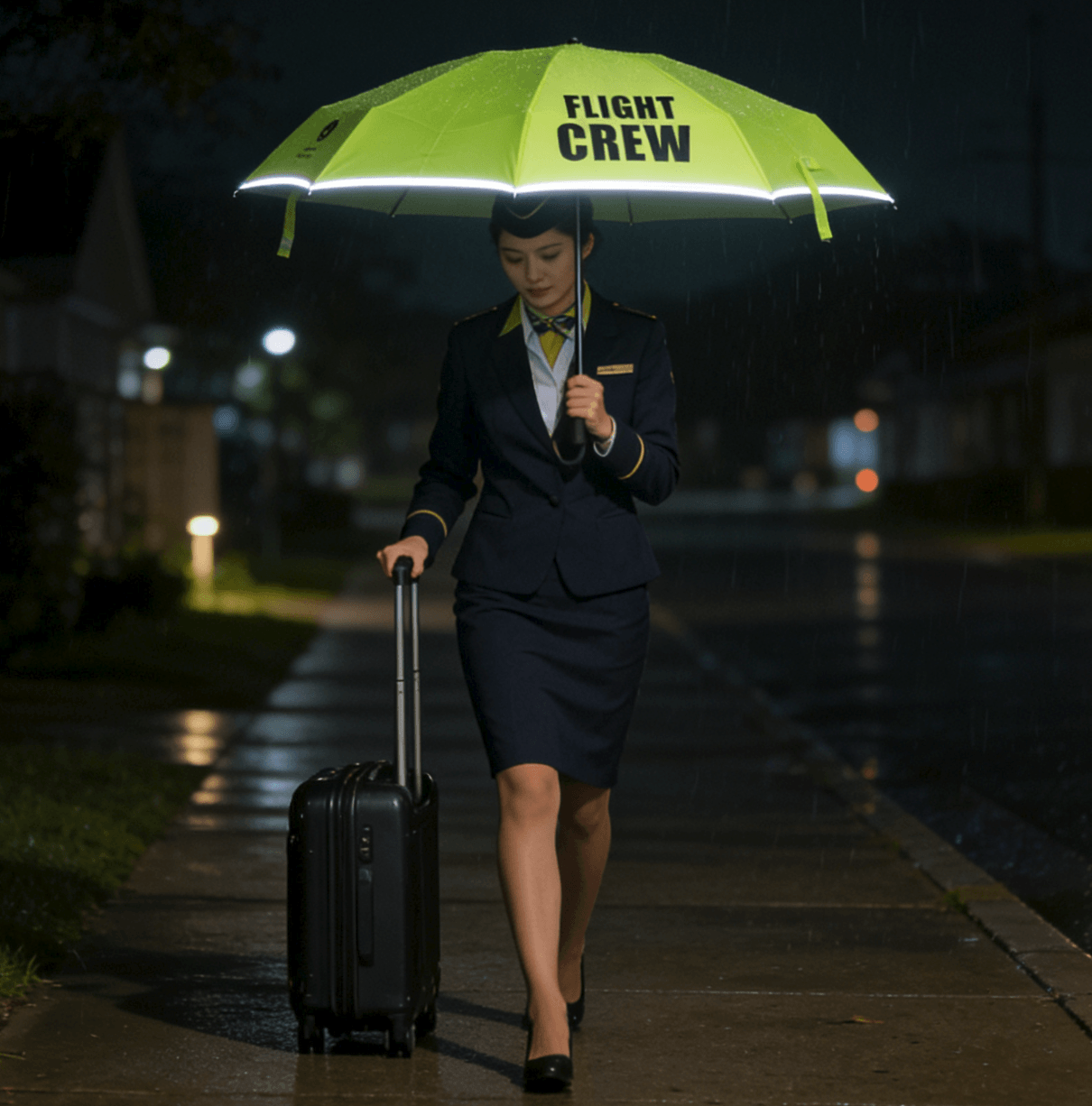
The Result
- Safety: Enhanced visibility in night operations
- Performance: Wind-resistant and quick-drying
- Brand: Clean, premium, aviation-aligned appearance
- User Feedback: Positive adoption among crew members
What This Project Demonstrates
This project highlights a key principle:
- Customization is problem-solving, not decoration
- Quality is built into process, not added later
- Iteration is essential for high-performance products
Planning a High-Performance Umbrella Project?
If your project involves safety, durability, and brand alignment—not just printing—we can help.