

Table of Contents
Beyond the “Logo Slap”: An Engineering Guide to Truly Creative Umbrellas
By Justin Zhang
Product Manager, HF Umbrella
10+ Years OEM Manufacturing | Tooling & Structure Specialist
The Problem: 95% of Promotional Umbrellas Are Structurally Boring
After more than a decade running an umbrella factory, I’ve processed thousands of corporate orders.
And I can say this confidently: most are structurally unremarkable.
Black canopy. White logo. Standard plastic hook handle. No structural differentiation.
Functionally acceptable? Yes.
Memorable? Rarely.
Real creativity in umbrellas is not about louder colors.
It is about engineering decisions.
1. Structural Creativity: Custom Handle Engineering
The most underutilized opportunity in umbrella design is the handle.
It is the first physical contact point. It defines tactile memory.
Custom Injection Mold Reality
- Tooling cost: USD 2,000 – 6,000 depending on complexity
- Tooling lead time: 25–35 days
- Recommended MOQ: 1,000 – 2,000 units to amortize mold cost
- Mold steel: Typically P20 for medium production runs
- Mold life: 20,000 – 100,000 shots depending on steel grade
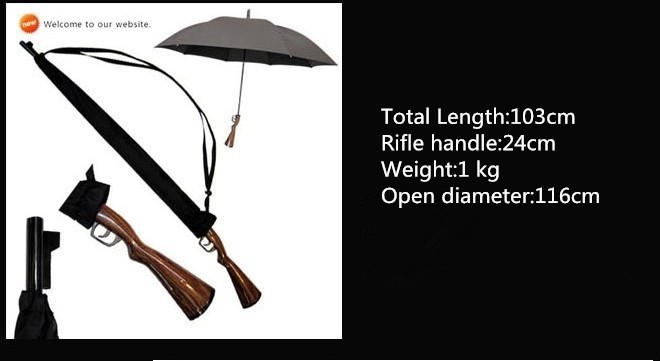
We once developed a gear-shift-shaped handle for an automotive client. Another project required a katana-style grip for a gaming brand.
However, creativity must pass structural evaluation:
- Center of gravity balance
- Weight distribution (over 550g becomes uncomfortable for daily use)
- Stress concentration points at shaft connection
- Drop-test durability
Creative form without structural reinforcement leads to failure.
Creative engineering makes it unforgettable.
2. Material Innovation: Hydrochromic Ink (With Manufacturing Constraints)
Hydrochromic (water-activated) ink creates dramatic visual impact.
Dry canopy appears plain. Rain reveals hidden patterns.
But here is the manufacturing truth:
- Best applied as localized effect, not full canopy coverage
- UV exposure can degrade effect after 6–12 months depending on climate
- Colorfastness lower than standard sublimation ink
- Cost increase: 15%–30% compared to standard printing
- Requires fabric compatibility testing before bulk production
It works best for:
- Short-term campaigns
- Event-driven promotions
- Social-media-focused branding
It is not ideal for long-term hotel inventory or multi-year corporate programs.
Creative features must align with lifecycle expectations.

3. Double-Layer (Inner Print) Engineering
For conservative brands (law firms, banks, financial institutions), external creativity may not be acceptable.
The double-layer structure solves that problem.
Technical Details:
- Two separate canopy layers stitched independently
- Outer layer: solid conservative color
- Inner layer: full digital sublimation artwork
- Weight increase: approximately 80–120g
- Cost increase: 20%–35% compared to single layer
- Improved wind stability when vented structure is applied
However, production complexity increases:
- Panel alignment must be precise
- Inner print registration must match rib structure
- Stitch density affects canopy tension
When engineered correctly, it creates a private visual experience while maintaining professional external branding.

4. Fabric & Print Engineering Realities
Creativity must respect material science.
- 190T Pongee: Lighter, economical, moderate tension stability
- 210T Pongee: Higher density weave, better long-term canopy shape
- RPET: Sustainable option, slightly higher cost
Color challenges:
- Deep blues (Reflex Blue range) require careful color calibration
- Fluorescent colors cannot be fully achieved via digital sublimation
- Large full-coverage dark prints increase drying time during production
Creative ambition must align with printing physics.
Feasibility Checklist for Creative Umbrella Projects
- Does the concept require new tooling?
- What is the amortization plan?
- What is expected product lifecycle?
- Are materials compliant with REACH/SVHC if selling to EU?
- Has wind resistance testing been conducted?
- Does added creativity compromise ergonomics?
Engineering discipline protects creative ambition.
Final Advice to Buyers
Do not ask your factory:
“How much for a standard umbrella?”
Ask instead:
“Here is our concept. What are the engineering implications?”
Creative umbrellas are not about louder logos.
They are about:
- Tooling strategy
- Material science
- Structural integrity
- Lifecycle alignment
- Commercial feasibility
That is how you move beyond the logo slap.
Have a Creative Concept? Let’s Feasibility-Test It.
Send:
- Concept sketches
- Target market
- Budget range
- Expected volume
I will provide a factory-level assessment covering tooling cost, MOQ, production risks and engineering feasibility.
Because real creativity survives manufacturing.
— Justin Zhang
HF Umbrella